

SOURCES OF BEE FLOWS IN POLLEN ANALYSIS OF HONEYS OF THE BIAŁA PODLASKA NEIGHBOURHOOD
tekst: Anna Wróblewska
Pszczelnicze Zeszyty Naukowe, Rok XXXIX, 1995 — Anna Wróblewska
strona 37PSZCZELNICZE ZESZYTY NAUKOWE Rok XXXIX, Nr 1 1995
Anna Wróblewska
Department of Botany, Agricultural University, Akademicka 15, 20-950 Lublin, Poland
Summary
The investigations were carried out in the years 1990-1991. Honey samples of the Biała Podlaska neighbourhood have been studied in order to determine the pollen participation of the nectarious and no-nectarious plants in honey’s sediments.
Among the nectarious plants the highest pollen frequency in honey has been stated for Brassica napus, Centaurea cyanus, Frangula alnus, Salix and Cruciferae, from among no-nectarious for Rumex, Gramineae and Lupinus.
There were found three Brassica napus honeys between the examined samples, whereas rest were multifloral honeys.
Keywords: honey, pollen analysis, Biała Podlaska.
INTRODUCTION
Pollen analysis of honeys is useful method determining the botanical and geografical origin of honeys (Maurizio 1951, 1971, 1975). The work in that field have been done by numerous investigators of various countries. In Poland polleniferous flora in the agricultural areas of the country was examined among others by Demianowicz and others (1966); Woźna (1966); Warakomska (1985); Warakomska, Jaroszyńska (1992).
The aim of this study was to determine the melliferous flora of Biała Podlaska neighbourhood, as well as pollen participation of various honey flow plants.
MATERIAL AND METHODS
In the years 1990-1991 the samples of twenty honeys were collected from beekeepers of several apiaries of the Biała Podlaska neighbourhood (fig.1).
Pollen analysis of honeys were made according to the Louveaux and others (1970) methods. Pollen participation of the nectarious plants as well as no-nectarious (anemophilous and entomophilous without nectaries) was investigated in the honey’s sediments. The colours of honeys were determined according to the Maerz and Paul dictionary of colour (1950).
strona 38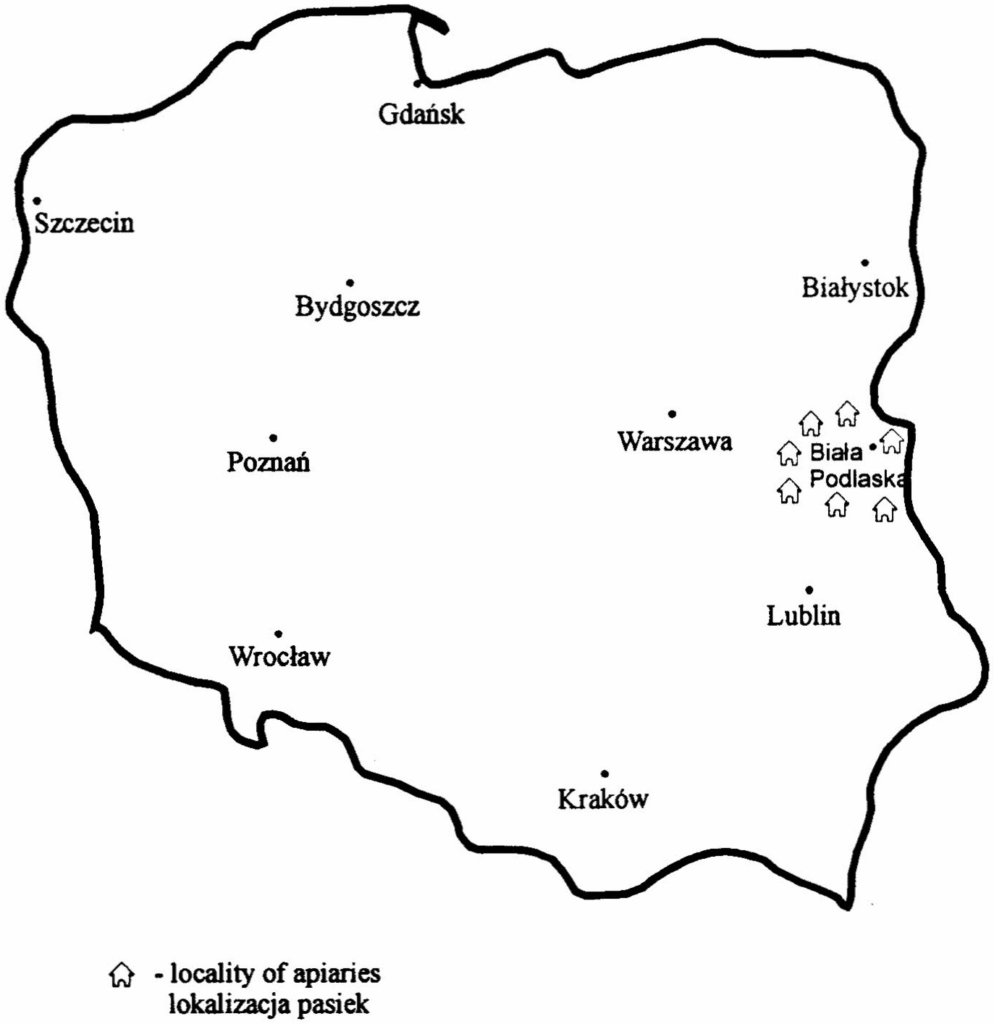
RESULTS
In the examined honeys there were found 54 types of pollen – 37 of nectarious plants and 17 of no-nectarious. Among the nectarious plants the highest pollen frequency within individual samples have been stated for Brassica napus, Centaurera cyanus, Frangula alnus, Salix and Cruciferae, whereas from among no-nectarious for Rumex, Gramineae and Lupinus (tab.1). The following types of pollen were stated in all investigated honeys: Frangula alnus, Salix, Rubus typ, Rumex and Gramineae. Spores of fungi, in small numbers, were present in 12 samples.
strona 39Table 1 Pollen frequency in honeys of the Biała Podlaska neighbourhood Frekwencja pyłku w miodach okolic Białej Podlaskiej
| Pollen / Pyłek — Sample No / Nr próbki | 1 | 2 | 3 | 4 | 5 | 6 | 7 | 8 | 9 | 10 | 11 | 12 | 13 | *) 14 | 15 | *) 16 | 17 | 18 | 19 | *) 20 |
|---|---|---|---|---|---|---|---|---|---|---|---|---|---|---|---|---|---|---|---|---|
| nectarious plants – rośliny nektarodajne | ||||||||||||||||||||
| 1. Brassica napus | ● | ● | ● | ● | ● | □ | ● | ● | ● | ● | ● | ● | ■ | ● | ● | ● | ● | □ | ● | |
| 2. Centaurea cyanus | ⊙ | ⊙ | ⊙ | □ | ● | □ | □ | □ | □ | ⊙ | ⊙ | ⊙ | □ | □ | ● | ⊙ | □ | □ | ||
| 3. Frangula alnus | □ | ● | ● | □ | ● | □ | ● | □ | □ | □ | □ | □ | ● | ⊙ | □ | □ | □ | ⊙ | ● | ⊙ |
| 4. Salix | □ | □ | ● | ● | ● | □ | □ | □ | □ | □ | □ | □ | □ | ⊙ | ⊙ | □ | □ | ⊙ | ⊙ | □ |
| 5. Cruciferae | □ | □ | □ | □ | ⊙ | □ | ⊙ | □ | ⊙ | ● | ● | ⊙ | ||||||||
| 6. Rubus typ | □ | ⊙ | □ | □ | □ | □ | ⊙ | ⊙ | □ | □ | □ | □ | □ | □ | □ | □ | ⊙ | □ | □ | □ |
| 7. Phacelia | ⊙ | □ | ⊙ | □ | ⊙ | |||||||||||||||
| 8. Trifolium repens | ⊙ | ⊙ | □ | ⊙ | ⊙ | ⊙ | ⊙ | ⊙ | ⊙ | □ | ⊙ | □ | ⊙ | □ | □ | □ | □ | |||
| 9. Fagopyrum | ⊙ | ⊙ | ⊙ | ⊙ | ⊙ | □ | ⊙ | ⊙ | □ | □ | ⊙ | |||||||||
| 10. Lychnis | □ | ⊙ | ||||||||||||||||||
| 11. Crataegus | ⊙ | ⊙ | ⊙ | □ | ⊙ | ⊙ | □ | |||||||||||||
| 12. Lotus | ⊙ | ⊙ | ⊙ | |||||||||||||||||
| 13. Diplotaxis | □ | □ | ⊙ | ⊙ | ⊙ | ⊙ | ||||||||||||||
| 14. Heracleum typ | □ | □ |
| Pollen / Pyłek — Sample No / Nr próbki | 1 | 2 | 3 | 4 | 5 | 6 | 7 | 8 | 9 | 10 | 11 | 12 | 13 | *) 14 | 15 | *) 16 | 17 | 18 | 19 | *) 20 |
|---|---|---|---|---|---|---|---|---|---|---|---|---|---|---|---|---|---|---|---|---|
| 15. Achillea typ | ⊙ | □ | ⊙ | □ | □ | □ | □ | ⊙ | ⊙ | ⊙ | □ | ⊙ | □ | ⊙ | ⊙ | ⊙ | ||||
| 16. Malus typ | ⊙ | ⊙ | ⊙ | ⊙ | ⊙ | □ | □ | ⊙ | ⊙ | ⊙ | ⊙ | □ | ||||||||
| 17. Melilotus | ⊙ | ⊙ | □ | ⊙ | ⊙ | ⊙ | ⊙ | |||||||||||||
| 18. Trifolium pratense | ⊙ | ⊙ | ⊙ | □ | ||||||||||||||||
| 19. Calluna | ⊙ | |||||||||||||||||||
| 20. Cirsium typ | ⊙ | □ | ⊙ | ⊙ | ⊙ | ⊙ | ⊙ | |||||||||||||
| 21. Taraxacum typ | ⊙ | ⊙ | ⊙ | ⊙ | ⊙ | ⊙ | ⊙ | ⊙ | ⊙ | □ | ⊙ | ⊙ | □ | ⊙ | ⊙ | ⊙ | ||||
| 22. Genista | □ | ⊙ | ||||||||||||||||||
| 23. Aesculus | ⊙ | □ | ⊙ | ⊙ | ⊙ | ⊙ | ⊙ | ⊙ | ⊙ | |||||||||||
| 24. Vicia typ | ⊙ | ⊙ | ⊙ | ⊙ | ⊙ | ⊙ | ⊙ | ⊙ | ⊙ | |||||||||||
| 25. Tilia | ⊙ | ⊙ | ⊙ | ⊙ | ⊙ | ⊙ | ⊙ | ⊙ | ⊙ | |||||||||||
| 26. Helianthus typ | ⊙ | |||||||||||||||||||
| 27. Anthriscus typ | ⊙ | ⊙ | ⊙ | ⊙ | ⊙ | ⊙ | ⊙ | ⊙ | ⊙ | |||||||||||
| 28. Caryophyllaceae | ⊙ | ⊙ | ⊙ | ⊙ | ⊙ | ⊙ | ⊙ | ⊙ | ⊙ | ⊙ | ⊙ | |||||||||
| 29. Convolvulus | ⊙ | ⊙ | ||||||||||||||||||
| 30. Polygonum bistorta | ⊙ | ⊙ | ⊙ | ⊙ | ⊙ | ⊙ | ⊙ | ⊙ | ||||||||||||
| 31. Cornus | ⊙ | |||||||||||||||||||
| 32. Salvia | ⊙ | |||||||||||||||||||
| 33. Viola hort. | ⊙ | ⊙ | ⊙ | ⊙ | ||||||||||||||||
| 34. Centaurae jacea | ⊙ | ⊙ |
| Pollen / Pyłek — Sample No / Nr próbki | 1 | 2 | 3 | 4 | 5 | 6 | 7 | 8 | 9 | 10 | 11 | 12 | 13 | *) 14 | 15 | *) 16 | 17 | 18 | 19 | *) 20 |
|---|---|---|---|---|---|---|---|---|---|---|---|---|---|---|---|---|---|---|---|---|
| 35. Chamaenerion | ⊙ | |||||||||||||||||||
| 36. Polygonum pers. | ⊙ | |||||||||||||||||||
| 37. Ribes | ⊙ | |||||||||||||||||||
| no-nectarious plants – rośliny nienektarodajne | ||||||||||||||||||||
| 38. Rumex | □ | □ | □ | □ | □ | □ | ● | □ | □ | □ | ⊙ | □ | ⊙ | ⊙ | ⊙ | □ | □ | □ | ⊙ | ⊙ |
| 39. Gramineae | □ | □ | □ | □ | ⊙ | ⊙ | □ | ⊙ | □ | □ | □ | ⊙ | ⊙ | ⊙ | □ | □ | ⊙ | ⊙ | ⊙ | ⊙ |
| 40. Lupinus | □ | □ | □ | □ | ⊙ | ⊙ | ⊙ | ⊙ | ||||||||||||
| 41. Plantago | ⊙ | ⊙ | ⊙ | ⊙ | ⊙ | □ | ⊙ | ⊙ | ⊙ | □ | ⊙ | |||||||||
| 42. Rosa | □ | ⊙ | ⊙ | |||||||||||||||||
| 43. Filipendula | □ | ⊙ | ⊙ | □ | ⊙ | ⊙ | ⊙ | ⊙ | ⊙ | |||||||||||
| 44. Zea | ⊙ | |||||||||||||||||||
| 45. Ranunculus | □ | ⊙ | ⊙ | ⊙ | ⊙ | ⊙ | ⊙ | ⊙ | ⊙ | ⊙ | ⊙ | ⊙ | ⊙ | ⊙ | ⊙ | |||||
| 46. Cereales typ | ⊙ | □ | ⊙ | ⊙ | ⊙ | ⊙ | ⊙ | |||||||||||||
| 47. Quercus | ⊙ | ⊙ | ⊙ | ⊙ | ⊙ | ⊙ | ⊙ | ⊙ | ||||||||||||
| 48. Betula | ⊙ | |||||||||||||||||||
| 49. Corylus | ⊙ | ⊙ | ⊙ | ⊙ | ||||||||||||||||
| 50. Papaveraceae | ⊙ | |||||||||||||||||||
| 51. Carex | ⊙ | ⊙ | ||||||||||||||||||
| 52. Pinus | ⊙ | ⊙ | ||||||||||||||||||
| 53. Alnus | ⊙ | ⊙ |
| Pollen / Pyłek — Sample No / Nr próbki | 1 | 2 | 3 | 4 | 5 | 6 | 7 | 8 | 9 | 10 | 11 | 12 | 13 | *) 14 | 15 | *) 16 | 17 | 18 | 19 | *) 20 |
|---|---|---|---|---|---|---|---|---|---|---|---|---|---|---|---|---|---|---|---|---|
| 54. Chenopodium | ⊙ | |||||||||||||||||||
| 55. unrecognized / nieoznaczone | ⊙ | ⊙ | ⊙ | ⊙ | ⊙ | ⊙ | ⊙ | ⊙ | ⊙ | ⊙ | ⊙ | ⊙ | ⊙ | ⊙ | ⊙ | ⊙ | ⊙ | ⊙ | ⊙ | ⊙ |
Pollen – Pyłek: ■ very often – bardzo częsty <45% ● often – częsty 45÷16% □ rare – rzadki 16÷3% ⊙ single – pojedynczy >3% *) – Brassica napus honeys – miody gatunkowe z Brassica napus
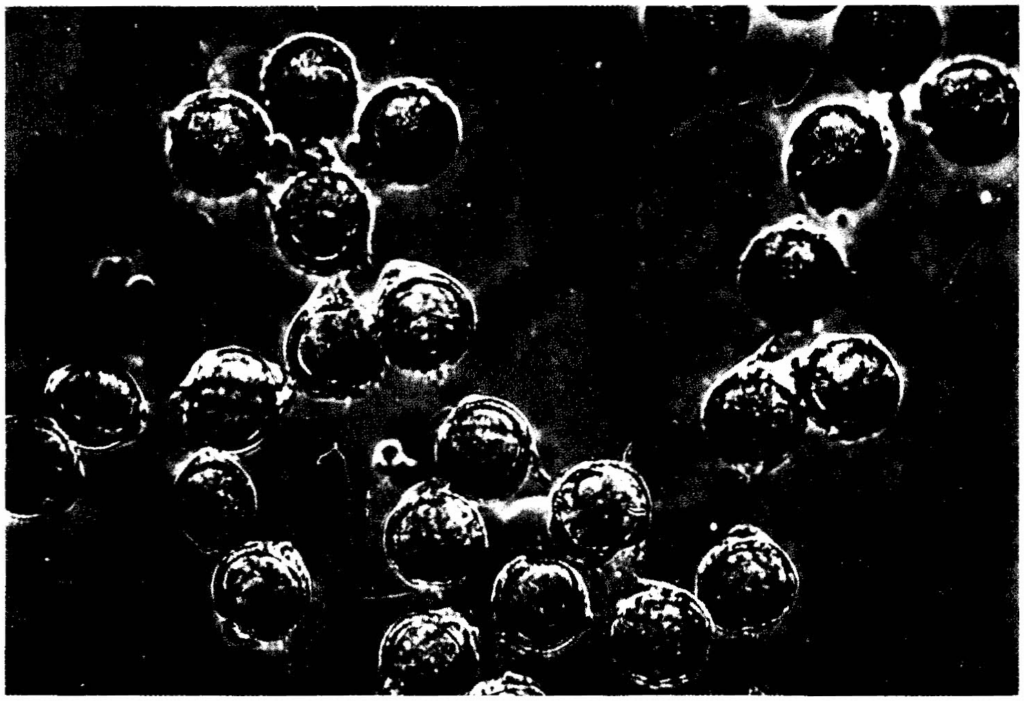
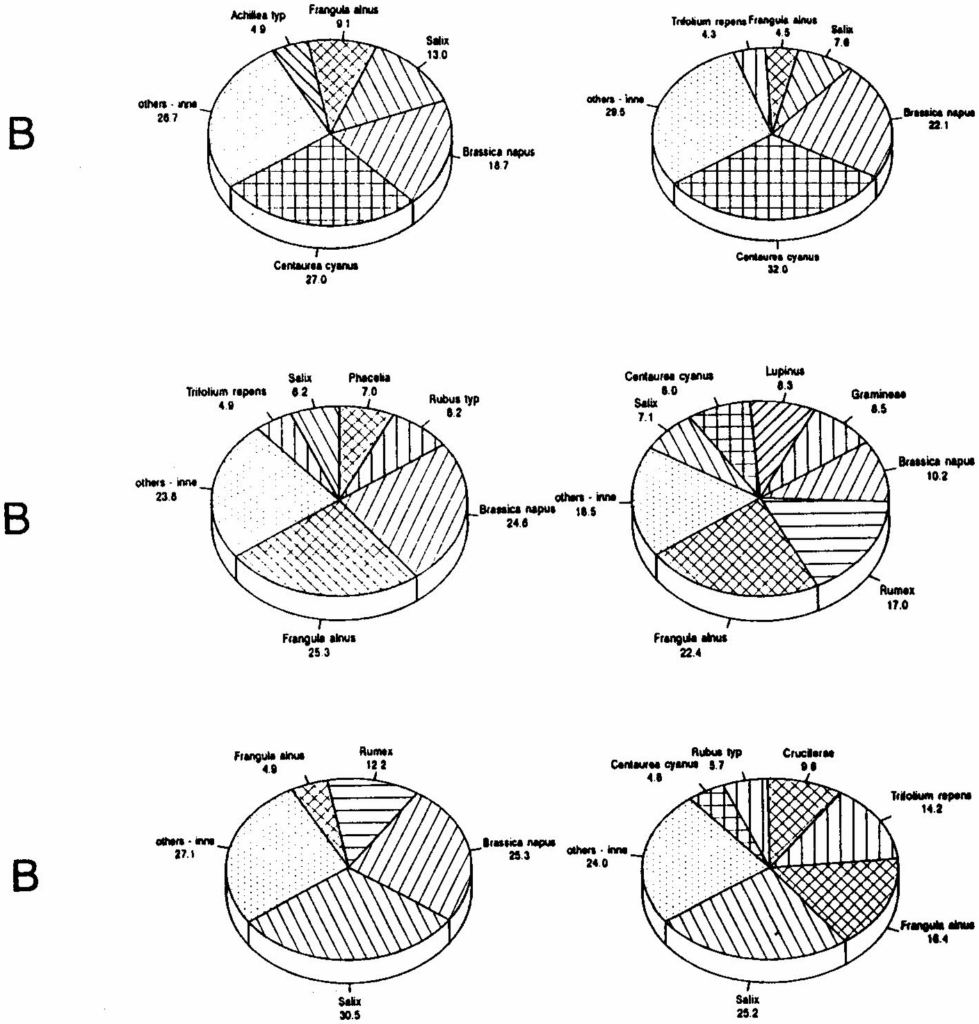
strona 43There were found three Brassica napus honeys, which contained 40.3÷80.3% of its pollen (fig.2A, phot.1). Among the rest, which were multifloral honeys (fig.2B) there were two by two from flow of Centaurea cyanus – 27.0÷32.0% frequency, Frangula alnus – 22.4÷25.3% and Salix – 25.2÷30.5%.
Participation of plants groups in honeys was as follows: cultivated plants – 13.0%, trees and shrubs – 29.7%, weeds – 20.3%, meadow plants – 25.9%, forest plants – 7.4%, others – 3.7%.
Pollen spectrum of tested samples indicates that honeys were collected during spring and summer time. Their colours hesitated from bright creamy to amber.
strona 44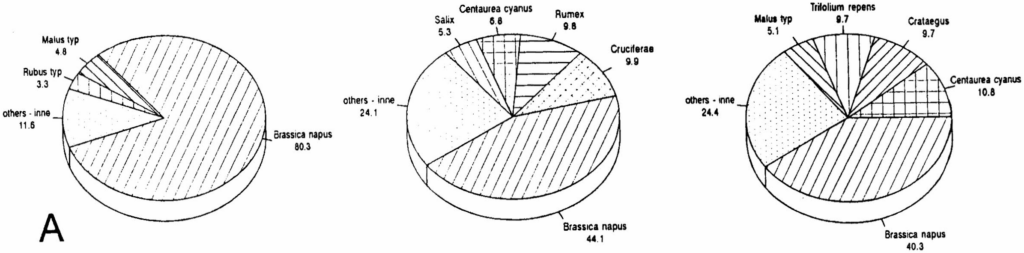
CONCLUSIONS
- The main sources of bee flows in the Biała Podlaska neighbourhood are: Brassica napus, Centaurea cyanus, Frangula alnus, Salix, Cruciferae and Rubus.
- Most of the investigated honeys there were multifloral, only three Brassica napus honeys have been origined to the agricultural areas.
- The melliferous flora of multifloral honeys of the Biała Podlaska neighbourhood includes mainly species of the natural seats – meadows and forests.
REFERENCES
Demianowicz Z., Lecewicz W., Warakomska Z. (1966) – Beitrag zur Quantitativen Pollenanalyse der Buchweizenhonige. Z.Bienenforsch. (Deutsche Bienenwirtschaft Teil 2), 8(5):148-161.
Louveaux J., Maurizio A., Vorwohl G. (1970) – Les methodes de la melisso – palynologie. Apidologie, 1(2):212-227.
Maerz A., Paul M. (1950) – A dictionary of color. Mc Craw – Hill Book Co., pp 208.
Maurizio A. (1951) – Pollen analysis of honeys. Bee World, 32(1):1-5.
Maurizio A. (1971) – Le spectre pollinique des miels Luxembourgeois. Apidologie, 2(3):221-238.
Maurizio A. (1975) – Microscopy of honey. In: E.Crane (Editor), Honey: A Comprehensive Survey. Morrison and Gibb, London, 240-257.
Warakomska Z. (1985) – Obraz pyłkowy miodów i pierzgi Kotliny Jeleniogórskiej. Pszczeln.Zesz.Nauk., 29:235-263.
Warakomska Z., Jaroszyńska (1992) – Obraz pyłkowy miodów spadziowych Roztocza. Pszczeln.Zesz. Nauk., 36:149-156.
Woźna J. (1966) – Obraz pyłkowy i barwa niektórych odmianowych miodów handlowych. Pszczeln.Zesz.Nauk., 10(1-2-3-4):139-153.
ŹRÓDŁA POŻYTKÓW PSZCZELICH W OBRAZIE PYŁKOWYM MIODÓW OKOLIC BIAŁEJ PODLASKIEJ
A. Wróblewska
Streszczenie
Badania prowadzono w Katedrze Botaniki Akademii Rolniczej w Lublinie w latach 1990-1991. 20 próbek miodów pobranych z kilkunastu pasiek okolic Białej Podlaskiej (ryc.1) poddano analizie pyłkowej stosując metodę Louveaux i in. (1970). W osadach miodowych określono udział pyłku roślin nektarodajnych i nienektarodajnych (wiatropylnych i owadopylnych bez nektarników). Barwy miodów określono na podstawie klucza do barw Maerza i Paula (1950).
W badanych próbkach wyróżniono 54 typy ziarn pyłku, wśród których 37 stanowiły rośliny nektarodajne i 17 nienektarodajne (tab.1). Wśród roślin nektarodajnych najwyższą frekwencję pyłku w miodach wykazały: Brassica napus, Centaurea cyanus, Frangula alnus, Salix
strona 47i Cruciferae, a wśród nienektarodajnych Rumex, Gramineae i Lupinus. W 12-tu miodach stwierdzono obecność nielicznych zarodników grzybów.
Trzy spośród badanych miodów określono jako gatunkowe rzepakowe, zawierające 40,3÷80,3% pyłku Brassica napus (ryc.2A, fot.1). Pozostałe to wielokwiaty (ryc.2B), wśród których wyróżniono po dwa z pożytku Centaurea cyanus 27,0÷32,0% udziału pyłku, Frangula alnus 22,4÷25,3% i Salix 25,2÷30,5%.
Udział poszczególnych grup roślin pożytkowych w miodach wynosił: rośliny uprawne – 13,0%, drzewa i krzewy – 29,7%, chwasty – 20,3%, rośliny łąkowe – 25,9%, rośliny leśne – 7,4%, inne – 3,7%.
Badane miody pochodziły z okresu wiosennego i letniego, ich barwa wahała się od jasno kremowej do bursztynowej.
Słowa kluczowe: miód, analiza pyłkowa, Biała Podlaska.
Errata — błędy druku znalezione podczas digitalizacji
- s. 37: „geografical” → geographical
- s. 38: „Centaurera” → Centaurea
- s. 40, tab. 1: „Centaurae jacea” → Centaurea jacea
- s. 42, legenda: „<45%” → >45%
- s. 42, legenda: „>3%” → <3%
- s. 46, piśmiennictwo: „Mc Craw – Hill” → McGraw-Hill