

GRADED GEOGRAPHIC VARIABILITY IN HONEYBEES AND ENVIRONMENT
tekst: Friedrich Ruttner
Pszczelnicze Zeszyty Naukowe, Rok XXIX, 1985 — Friedrich Ruttner
strona 81PSZCZELNICZE ZESZYTY NAUKOWE Rok XXIX 1985
Friedrich Ruttner*)
Instititut für Bienenkunde (Polytechnische Gesellschaft) Oberursel, Universität Frankfurt/M.
SUMMARY
A graded variation of a number of quantitative characters was established, strongly correlated to geographic latitude. This „geocline” extends along the Atlantic coast from Scandinavia to the Cape of Good Hope, thus covering 94° of latitude. In the area of the European Black bee (Apis mellifera mellifera) however, this trend is reversed for the length of probocis and 3d leg (decreasing length with increasing latitude). — In East Africa a similar cline was found from low to high altitudes. These observations, which correspond well to general rules of zoogeography, can not be generalized for other geographic races of honeybees, as demonstrated by various examples.
INTRODUCTION
It is one of the early accomplishments of the study of animal geography that parallel trends were found in the geographic variation of species, corresponding to zones of identical geographic latitude, and/or climate. This is not surprising since climatic factors act on all organisms of a zone, thus provoking analogous responses during selection.
The best known and analysed general trends are BERGMANN’S rule (1847) and ALLEN’S rule (1877; see RENSCH 1929, HUXLEY 1939): Geographic races of one species which live in the north are larger than those in the south, and appendages of the body (leg, wing, beak) are relatively shorter in the north than in the south. The same correlation was found between increased body size (and decreased length of exposed body parts) and altitude.
Changes in climate from one geographic zone to the other are mostly
*) With a grant of the Deutsche Forschungsgemeinschaft.
strona 82gradual, as are variations in size of animals. The tendency of gradual variation of a character in a certain direction was termed „cline” by A. HUXLEY in 1938. „A cline is a graduation in measurable characters”. Clines extending over zones of geographic latitude (generally over long distances) are called geoclines, those observed in zones of different altitudes (and short distances) ecoclines (HUXLEY 1939). The same phenomenon, the gradual directed variation, was described by B. RENSCH (1929) in his concept of „geographischer Rassenkreis”. The difference between northern and southern types can be very conspicuous as shown in tab. 1.
Table 1 Wing length of the sparrow, Passer domestica. in different zones (RENSCH 1939)
| wing lenght, mm | |
|---|---|
| Europe, Siberia | 76—82,5 |
| East Arabia | 72—77 |
| Sind (Pakistan) | 67—71 |
| Sri Lanka | 67 |
When no isolating mechanism is acting, the gradient of the cline may be very constant. In the puffin, for instance, wing length increases gradually from 135 mm in Majorca to 185 mm in Spitsbergen, that is 1% per 1,1°N latitude. Wing length of redpolls (Carduelis flammea) varies from the Alps to Greenland from 72 to 82 mm, that is 1% per 2°N latitude (HUXLEY 1939).
These rules were established mainly for warm-blooded vertebrates (birds and mammals). RENSCH (1939) examined a number of vertebrate genera in reference to the validity of these rules and he found that in a great majority of cases (70—90%) the geographic variation of size showed the expected tendency.
For insects the evidence has not been quite clear so far. According to RENSCH (1950) poikilothermal animals tend to be largest where conditions of temperature and humidity are at an optimum and smallest when they are opposite. Thus it seems surprising that one of the first examples for a north-south gradient was provided by the honeybee. A number of Russian authors (CHOCHLOV 1916, MIKHAILOV 1922, ALPATOV 1925, SKORIKOV 1929) found during their studies of honeybees of the Russian plains that the length of proboscis decreases gradually from north to south (tab. 2, Fig. 1).
In addition to this graded variation of tongue length, the hind legs also show the same tendency of increasing length to the south, whereas the entire body gets substantially smaller from north to south in the same area (ALPATOV 1948). As a consequence the body proportions shift from a big, short legged to a smaller, long legged bee (fig. 2).
The honeybee became early a chief witness for a gradual directed
strona 83Table 2 Tongue length in relation to geographic latitude in the USSR (SKORIKOV 1929)
| Location | Degree N latitude | Tongue length(mm) | Difference |
|---|---|---|---|
| Leningrad | 60 | 5.73 | |
| 59 | 5.95 | .22=3.84%/1 °lat. | |
| 57.5 | 6.00 | ||
| Moskwa | 56 | 6.12 | .08=1.33%/1 °lat. |
| Tula | 54 | 6.22 | .05 |
| 52 | 6.28 | .03=1.56%/1 °lat. | |
| 48.3 | 6.43 | 0.4 | |
| Kuban | 46 | 6.53 | .04 |
| Krasnodar | 45 | 6.54 | .01=.15%/1 °lat, |
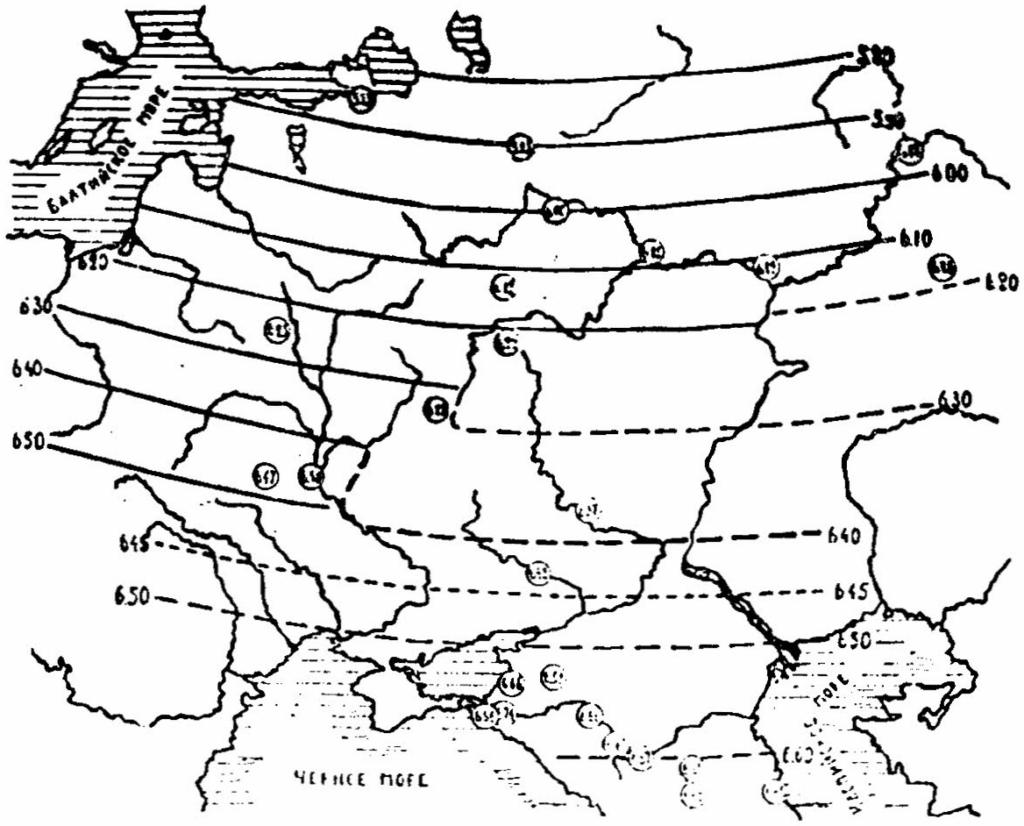
Fig. 1. Correlation of length of proboscis and geographic latitude in the USSR: isoglossae (SKORIKOV 1929)
variation by these data (fitting very well into BERGMANN’S and ALLEN’S rules), cited by RENSCH (1926), by HUXLEY when introducing the term „cline” and later on also in various textbooks.
Unfortunately, these data do not actually proof what they were supposed to: the existence of a gradation of quantitative characters parallel to a gradation of climatic conditions. As later studies have shown (RUTTNER 1952, GOETZE 1964), the gradation observed is partly a mere consequence of the hybridization of the short tongued and large A.m. mellifera from western and northern Europe with the long tongued, smaller A.m. carnica from south east (fig. 3). In Central Europe both races are sharply separated by the Alps, while in the eastern plains a smooth transition occurs from the „Forest bee” (A.m.silvarum =
strona 84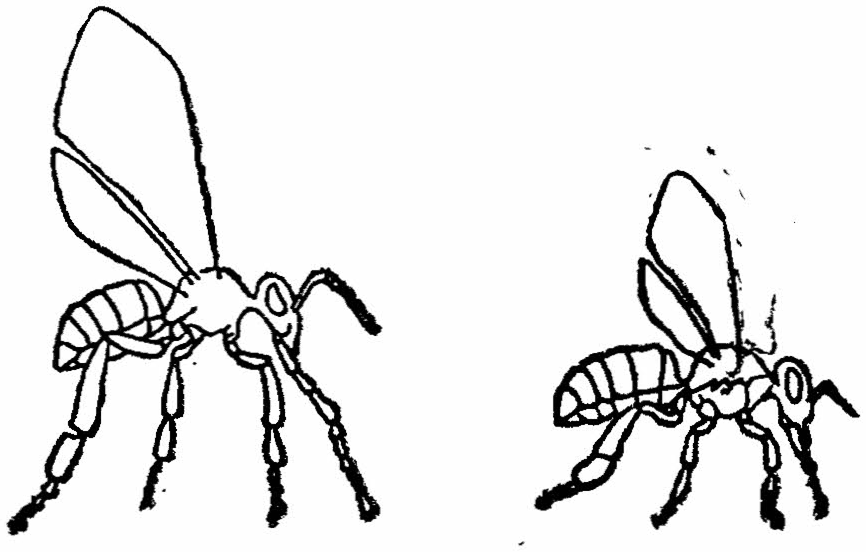
Fig. 2. „Long-tongued” southern and „short-tongued” northern bees from USSR (ALPATOV 1948)
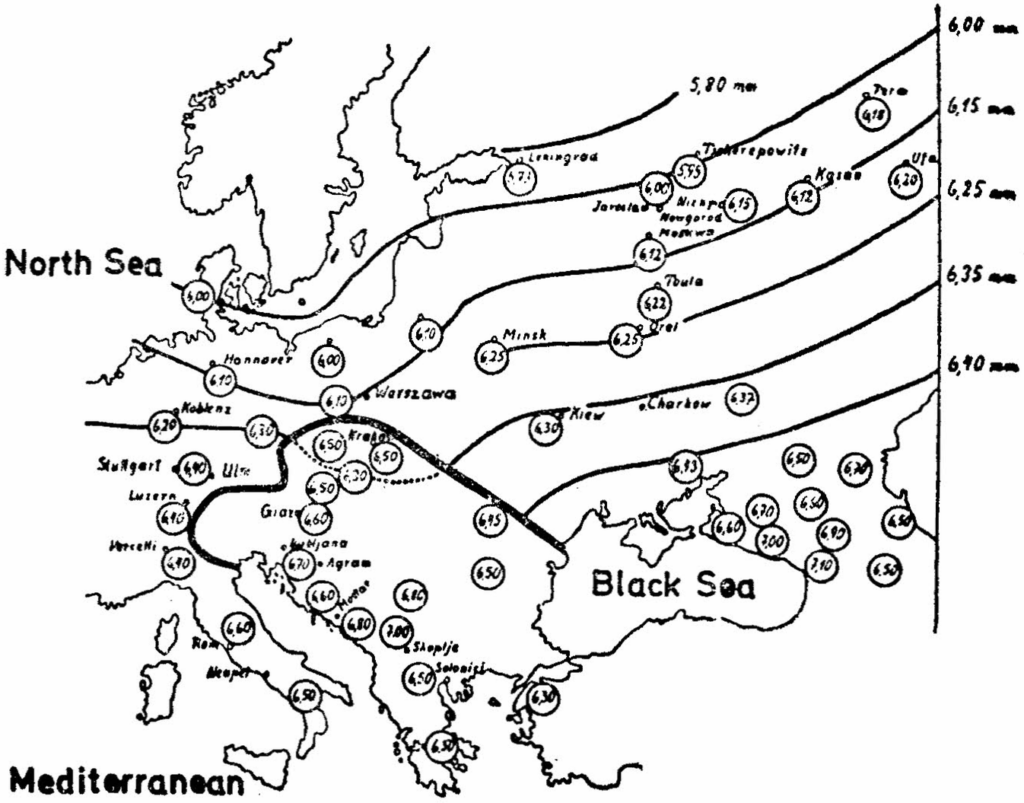
Fig. 3. Distribution of tongue length in Europe. Heavy line: border between carnica and mellifera (GOETZE 1964)
= A.m. mellifera) of the north to the „Steppe bee” (A.m. acervorum = A.m. carnica). of the south. Thus the gradual variation of tongue length from Leningrad to Krasnodar has to be listed — at least partly — in HUXLEY’s group of „grade characters not adaptively correlated with environment”.
A geocline of the honeybee from Scandinavia to South Africa. If the first attempt to proof a true climate-correlated variation in honeybees did not hold up to a re-examination on a larger scale, this does not exclude that gradual geographic variations exist elsewhere in A. mellifera. Therefore, the morphometric data stored in the collection of the Institut für Bienenkunde Oberursel were scrutinized in order to detect possibly existing geographic trends in variation.
strona 85MATERIAL AND METHODS
Samples were selected along the north-south gradient of geographic latitude with the largest distance in the area of distribution of A. mellifera. To provide comparable conditions, samples from the coast of the Atlantic ocean were preferred. Since the number of samples available for each region was different, only one sample comprising twenty bees was chosen to represent a point in the graphs of fig. 4—7. However, this single-sample value was compared with the mean of the population (if several samples were at disposal) to avoid sampling errors. The analysis of the samples was done according to the method described by RUTTNER et al. (1978).
RESULTS
It is well known, that a „chain of races” (RENSCH 1926) of A. mellifera exists in western Europe and north Africa, with gradual transitions from north to south (RUTTNER 1973). Including samples from the whole western coast of the African continent, an „Atlantic
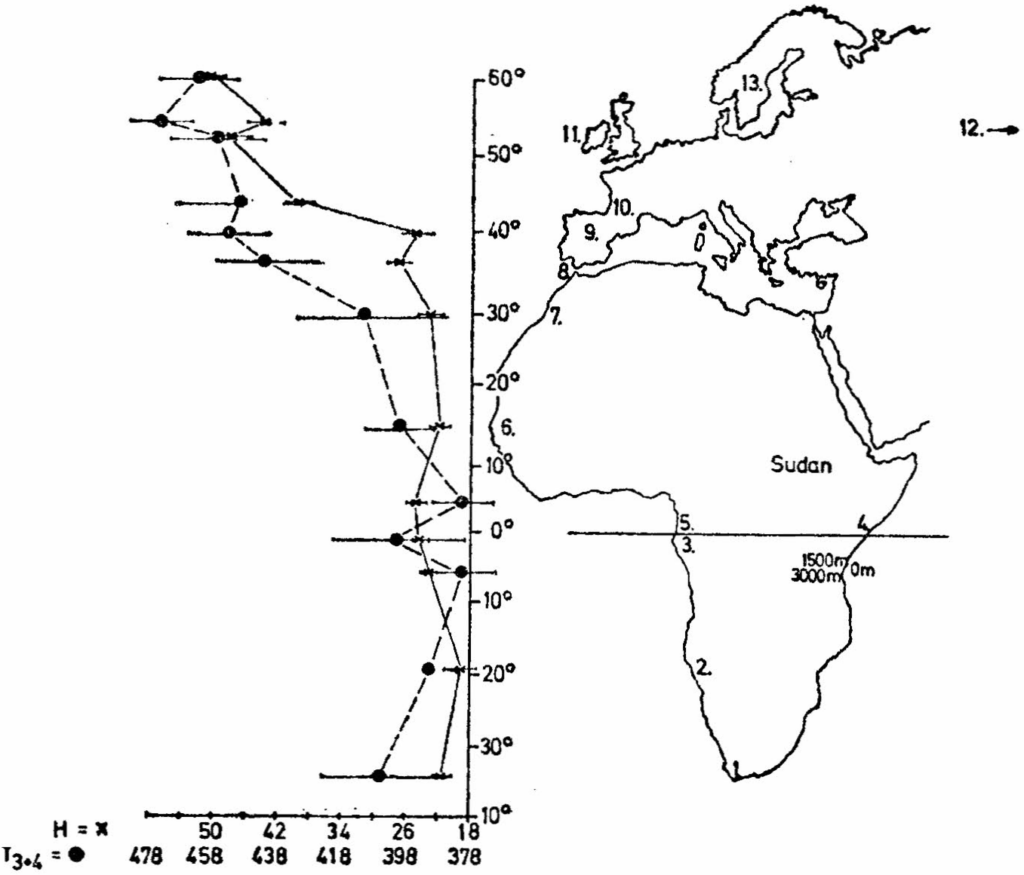
Fig. 4. Map of investigated area with location of samples (1—13). Left: geographic variation of hair length on tergite 5 (H,=×) and sum of tergites 3+4 (T3+4,=o) with standard deviations. Correlations between latitude and H=0.77, between latitude and T3+4=0.82
strona 86chain” of gradual increase, resp. decrease of quantitative characters can be established, extending over 94° geographic latitude (fig. 4). This is probably one of the longest continuous chains of gradual variations so far found in animals.
The decrease in size from high to low geographic latitudes concerns all measurements taken: sclerites of the ventral and dorsal side of the abdonem (fig. 4), forewing (fig. 6) and third leg (fig. 5). It is important to notice that the tendency of variation is reversed as the geographic latitude increases south of the equator (though this effect is somewhat obscured by the fact, that a sample of 20°S latitude comes from the Namibian desert, the location with the highest temperatures and therefore with the smallest bees of the series). Thus highly significant correlations are found between measurements of body size and geographic latitude (r=0.80—0.885).
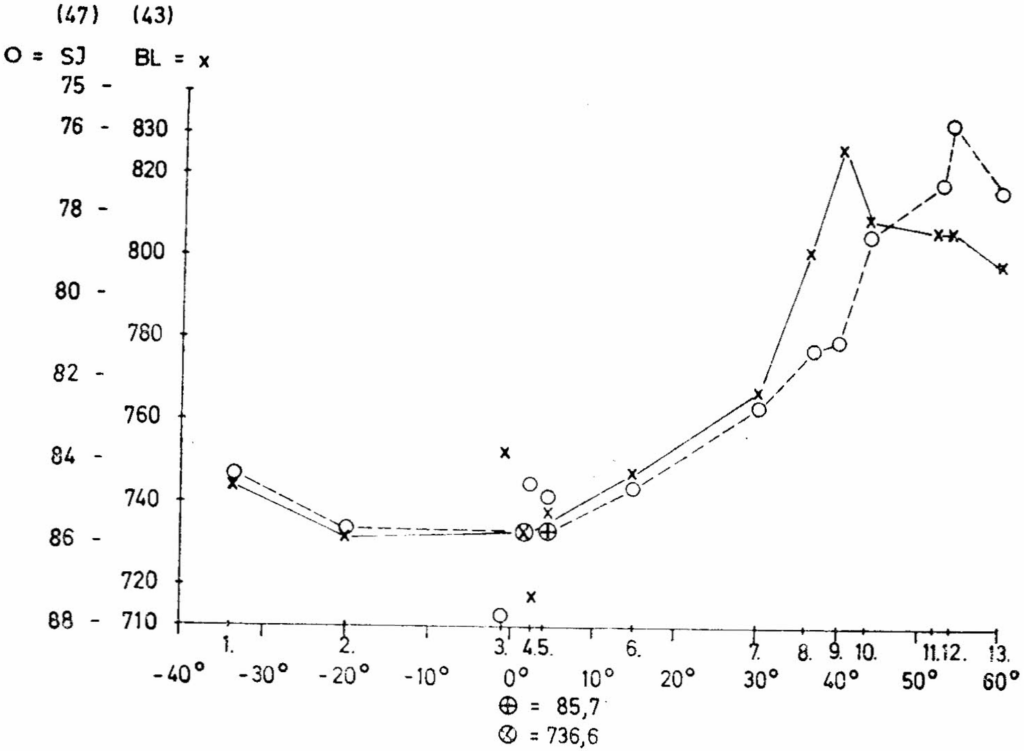
Fig. 5. Geographic variation in index of slenderness (SI,=0; correlation with latitude 0.885) and length of hind leg (Bl,=×; correlation with latitude 0.72). Location of samples see fig. 4 ×, +=means of samples near the equator (no. 3, 4, 5)
Special consideration needs to be given to the variation of length of the proboscis.
This body part varies strictly correlated with the other measurements, from the southernmost location (Cape Town) to 40° N latitude (southern France, fig. 6). From there up to the northern boundary of the distribution of the species (Oslo and Leningrad, 60° N latitude) a dissociation is observed: The length of the proboscis decreases, with still increasing
strona 87body size. The same phenomenon is observed in the length of the 3d leg (fig. 5). In consequence the coefficient of correlation with geographic latitude is considerably lower for these two characters (0.63, resp. 0.72).
This gradual change to a large, short tongued and short legged bee is observed within the area of the West European Black bee (A. m. mellifera) only. Thus the „isoglossae” of ALPATOV and others as a true geographic variation (geocline) are confirmed also for western Europe. However, this term can be applied in this case (diminuation of length of tongue and legs) only for this single race. This special trend, quite
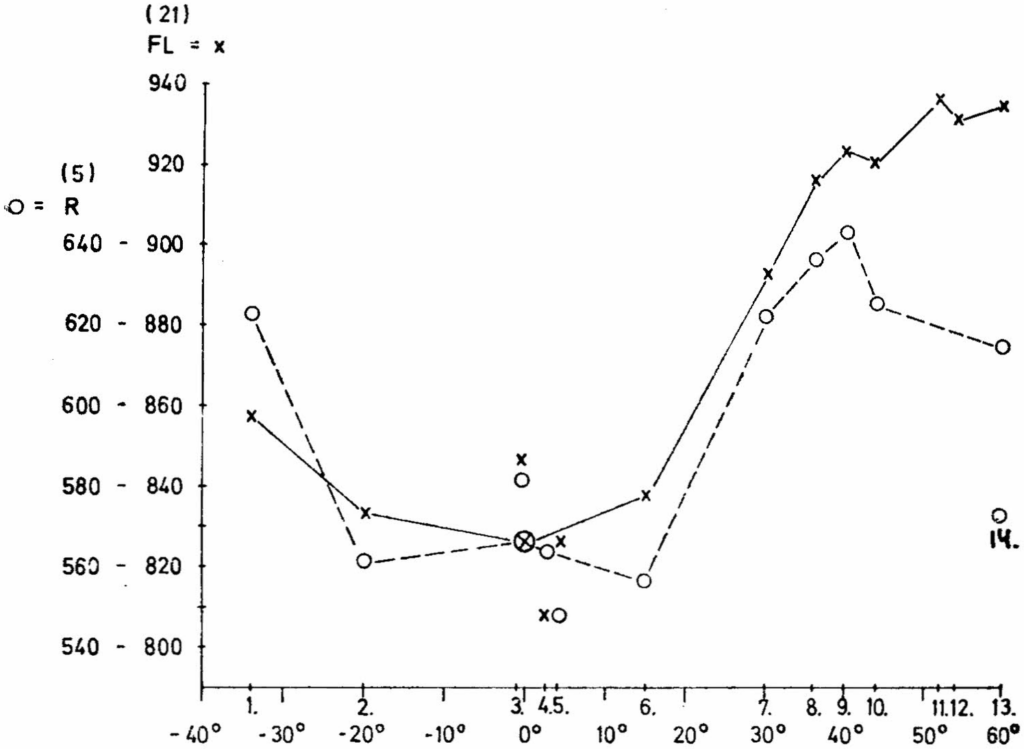
Fig. 6. Geographic variation in length of proboscis (R,=0; coeff.corN.,M=0.63) and length of forewing (FL, =×; r=0.80). Point no. 14 (Leningrad, 60° N lat.) is taken from the data by ALPATOV 1925. ×=means for R and Fl of the equator samples
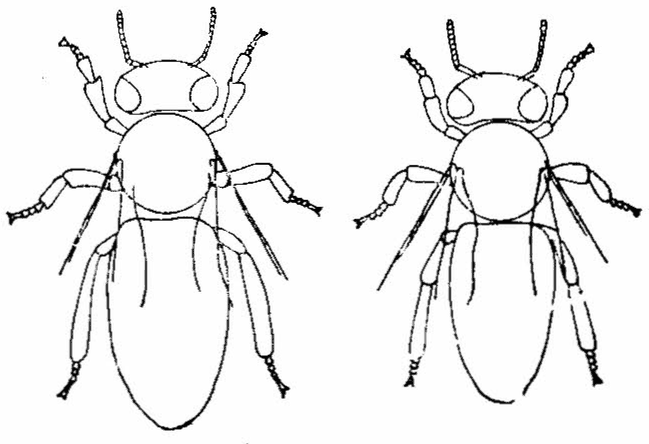
Fig. 7. Worker bee with broad abdomen (left; A.m.mellifera, index of slenderness, SI, 76—78), with slender abdomen (right; A.m. ligustica, SI 84)
strona 88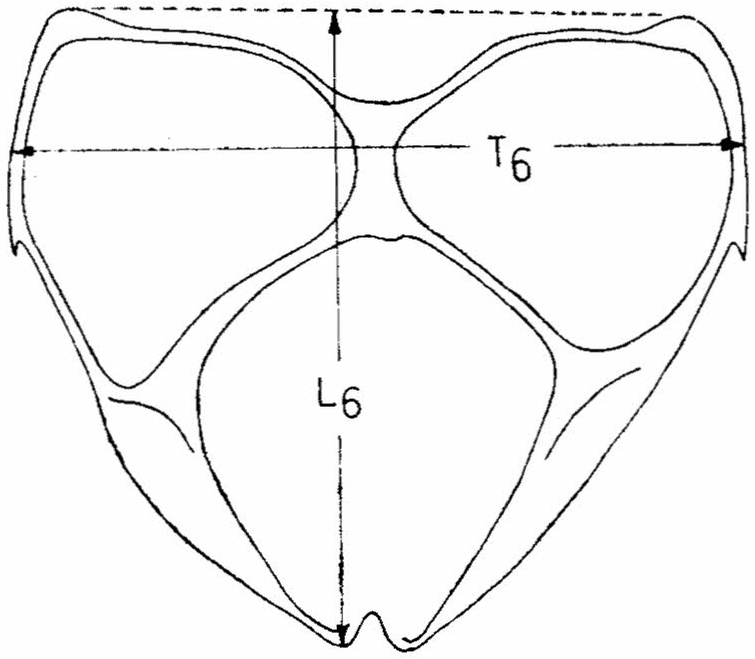
Fig. 8. Last sternite of a worker bee. Index of slenderness (SI)=L6 : T6 (RUTTNER et al. 1978)
different from the other races of the Atlantic chain, shows that other (perhaps local) factors of evolution are involved in these highly functional organs.
Except for the relative length of tongue or legs, variations of proportions may also concern the body of the bee. It is well known to those familiar with the variability of the honeybee, that bees can be big or small as a whole, but also broad or slender irrespective of overall size.
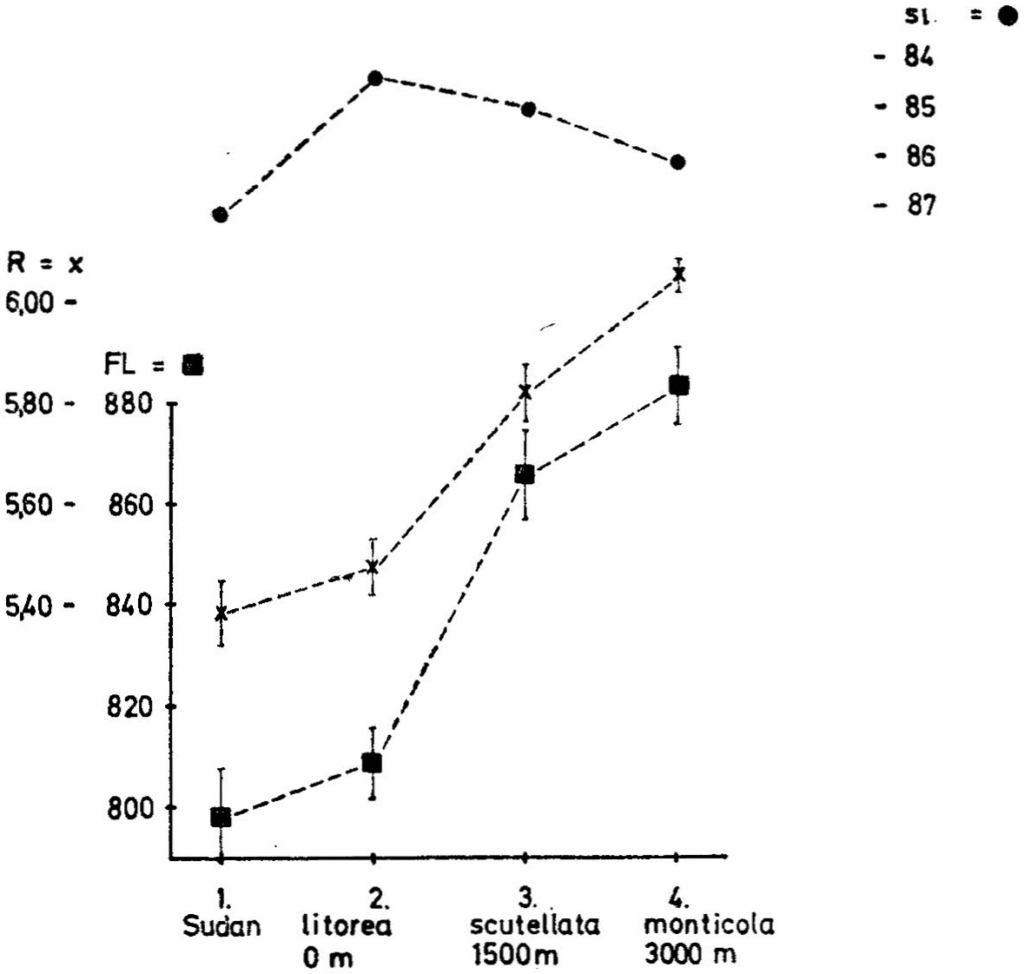
Fig. 9. Geographic variation in bees of East Africa. Length of proboscis (R,=■) and hind wing (FL, =×) is positively correlated with altitude. The SI does not show significant variation
strona 89The „broad” or „slender” aspect of a bee is very obvious at the abdomen (fig. 7), but a quantitative measurement for this character had to be found. Finally, the „index of slenderness” (longitudinal: transversal diameter of sternite 6, fig. 8) proofed to be very useful and reliable (RUTTNER et al. 1978). Along the coast of the Atlantic, the index of slenderness varies along with the body dimensions: bees of low latitudes have a slender abdomen (index 86), those of high latitudes a broad abdomen (index 76). A coefficient of correlation of 0.885 was found with the geographic latitude.
The third group of characters wtih directed variation concerns the hair: bees of cooler climate have longer hair, those of warmer zones of the Atlantic coast shorter hair (fig. 4). This corresponds to observations in mammals; in general, races of cooler climates have longer and denser hair. Hair lenght of the Siberian tiger is 45 mm, of the tiger of the Sunda Islands 26 mm; hair length of Lutra lutra in Germany 23 mm, in Sri Lanka 15 mm (RENSCH 1936).
Hair cover in honeybees serves two purposes:
a) Pollen collecting,
b) Thermoregulation (supposedly).
The statement of a correlation between hair length and geographic latidude demonstrates the physiological significance of the hair cover even in a poikilotherm animal. The width of variation in A. mellifera (0.13—0.50 mm) is greater than in mammals and exceeds that of any other character measured in bees.
As far as colour is concerned, a kind of reversion of GLOGER’s rule can be observed. This rule says that within species of warm-blooded animals the melanin content increases towards warmer zones. In honeybees, in general, races of cool climates are more pigmented than thohe of warm climates. Abrupt changes are found in this character instead of gradual transitions in pigmentation. In the Atlantic chain of races, the types with dark pigmentation are found at both ends, in zones of high geographic latitude: mellifera, iberica and intermissa in the north, capensis in the south. The same holds true for a race of higher altitudes, A. m. monicola. The bees found on both sides of the equator show only little pigmentation.
To this horizontal, long-distance geocline corresponds a vertical, short-distance ecocline. As shown by SMITH (1961) in East Africa (Tanzania) three different races are found within a distance of only 300 km and a difference in altitude of 3000 m: A. m. litorea in the coastal zone, A. m. scutellata in the savanna (1000—2000 m) and A. m. monticola up to 3000 m in the Rain Forest of the Kilimanjaro. A gradual variation correlated to altitude is observed, including all the characters varying in horizontal direction, with one exception: the proportions of abdomen (index of slenderness) remain the same irrespective of boody size (Fig. 9).
It has to be emphasized that the lowest values of characters of body size and hair length do not necessarily occur at point 0.0° of latitude,
strona 90but in zones with the highest temperatures (mostly off shore, as in Sudan or on the Arabian Peninsula). This indicates thtt the factor of environment correlated with body dimensions mainly is temperature.
These general rules of variation as shown in the races of A. mellifera along the eastern border line of the Atlantic are found in some way also in the three other Apis species (as far as measurements were taken). In A. cerana, the northern hill variety is larger and darker than the variety of the plains and the islands in the south of Asia. In A. florea the bees of the north (Pakistan, Iran) are distinctly larger than those of the south, as e.g. Sri Lanka (RUTTNER et al. 1985). A. laboriosa from the Himalayan mountains (described as a distinct species by SAKAGAMI in 1980), belonging to the dorsata group, is the largest honeybee observed so far.
These close relations between morphometric variation and geographic latitude in one line of races along the Atlantic and similar observations in the other species, however, cannot be generalized. Morphometric variation of honeybees is not a mere function of the physical environment as temperature. There are too many exceptions, e.g.:
— the reversion of the trend of a geocline, as shown above in A. m. mellifera,
— the two extremes in size are found in relatively similar latitudes: A. m. major of Morocco (35°) as the largest, and A. m. yemenitica from Saudi Arabia (25°) as the smallest mellifera-bee found so far,
— A. m. lamarckii, a small bee of tropical type is found in Egypt at a similar latitude as A. m. major,
— A. m. ligustica and A. m. carnica, occuring at the same latitude but differing in size and even more in pigmentation.
These observations (and a number of others) balance the picture, pointing to the fact that recent types of bees are the result of evolution, that is of a historical process. It is rather a special case that a long sequence of gradual morphological transformations can be observed as an indication of an undisturbed evolution.
Acknowledgement. I thank Agnes Mohr for reliable cooperation in biometric measurements and in designing of graphs, Dorothea Kauhausen for statistic analysis of the data.
BIBLIOGRAPHY
- Alpatov V. V., 1925: Über die Verkleinerung der Rüssellänge der Honigbiene von Süden nach Norden hin. Zool. Anzeiger 65, 103—111.
- Alpatov V. V., 1948: The strains of the honeybee and their utilization in agriculture. Sredi prirody, vol. 4. Soc. Study of Nature Moskwa. (in Russian).
- Chochlow B. P., 1916: See RENSCH 1929.
- Goetze G., 1964: Die Honigbiene in natürlicher und künstlicher Zuchtauslese. Verl. Parey, Hamburg.
- Huxley J., 1938: Clines: An auxiliary taxonomic principle. Nature 142, 219—220.
- Huxley J., 1939: Clines: An auxiliary method in taxonomy. Bijdragen for de Dierkunde 27, 491—518.
- Mikhailov A. S., 1929: Über lineare Korrelation zwischen Rüssellänge der Honigbiene und der geographischen Breite im ebenen europäischen Rußland. Archiv f. Bienenkunde 7, 28—33.
- Mikhailov A. S., 1930: A summary of what we know of long-tongued bees. Amer. Bee J. 70, 532—533.
- Rensch B., 1929: Das Prinzip geographischer Rassenkreise und das Problem der Artbildung. Verl. Borntraeger, Berlin.
- Rensch B., 1936: Studie über klimatische Parallelität der Merkmalsausprägung bei Vögeln und Säugern. Arch f. Naturgesch. N.F. 5, 317—363.
- Rensch B., 1939: Klimatische Auslese von Größenvarianten. Arch. f. Naturgesch.. N.F. 8, 98—128.
- Rensch B., 1950: Klima und Artbildung. Geolog. Rundschau 38, 137—152.
- Ruttner F., 1952: Alter und Herkunft der Bienenrassen Europas. Österr. Imker 4, 8—10.
- Ruttner F., 1973: Die Bienenrassen des Mediterranen Beckens. Apidologie 4, 171—172.
- Ruttner F., Tassencourt L., Louveaux J., 1978: Biometrical-statistical analysis of the geographic variability of Apis mellifera L. Apidologie 9, 363—381.
- Sakagami S. F., Matsumura T., Ito K., 1980: Apis laboriosa in Himalaya. The little known worlds largest honeybee (Hymenoptera, Apidae). Insecta Matsumurana, n.s. 19, 47—77.
- Skorikov A. S., 1929: Beiträge zur Kenntnis der kaukasischen Honigbienenrassen. Rep appl. Entomol. 4, 1—59, Leningrad. (in Russian with German summary).
- Smith F. G., 1961: Races of honeybees in East Africa. Bee World 42, 255—260.
ZMIENNOŚĆ U PSZCZOŁY MIODNEJ W ZALEŻNOŚCI OD ŚRODOWISKA
Friedrich Ruttner
Streszczenie
Stwierdzono stopniową zmienność cech morfologicznych pszczoły miodnej, ściśle skorelowanych z szerokością geograficzną. Kierunek zmienności rozciąga się wzdłuż wybrzeża Atlantyku od Skandynawii aż do przylądka Dobrej Nadziei, obejmując 94° szerokości geograficznej.
W obszarze pszczoły środkowo-europejskiej (Apis mellifera mellifera) ta zależność jest odwrotna dla długości języczka i trzeciej pary nóg (zmniejszenie długości wraz ze wzrostem szerokości geograficznej). We wschodniej Afryce podobna tendencja została stwierdzona w położeniu pionowym, od poziomu morza po wysokie góry. Te obserwacje, które odpowiadają ogólnym regułom zoogeografii, nie mogą jednakże być uogólnieniem dla innych ras geograficznych pszczoły miodnej.
ВАРИАЦИЯ У МЕДОНОСНОЙ ЛЧЕЛЫ И ЗАВИСИМОСТИ ОТ СРЕДЫ
F. Ruttner
Резюме
Констатировано постепенную вариацию нескольких морфологических свойств медоносной пчелы, точно связанных с географической широтой. Направление
strona 92вариации простирается вдоль побережья Атлантического океана от Скандинавии до мыса Доброй Надежды, охватывая 94° географической широты.
В районе наличия среднеевропейской пчелы (Apis mellifera mellifera) эта зависимость обратная для длины язычка и третьей пары ног (уменьшение длины вместе с повышением географической широты). В восточной Африке обнаружено подобную тенденцию в вертикальном положении, от уровня моря до высоких гор. Эти наблюдения, которые отвечают общим правилам зоогеографии, однако не могут быть обобщением для других географических пород медоносной пчелы.
GLEITENDE GEOGRAPHISCHE VARIABILITÄT BEI DER HONIGBIENE UND UMWELT
F. Ruttner
Zusammenfassung
Alpatov und andere Autoren hatten festgestellt, daß die Rüssellänge der Arbeitsbienen von Leningrad zum Schwarzen Meer in regelmäßiger Weise zunimmt (fig. 1). Da die Beine ebenfalls länger werden, während die Körpergröße in derselben Richtung etwas abnimmt, sind im Norden groß, kurzüßlige Bienen zu finden und im Süden kleinere, langrüßlige (fig. 1). Diese Befunde haben B. Rensch sowie J. Huxley als Beispiele bei der Aufstellung der Begriffe der „geographischen Rassenkreise”, bzw. der „cline” (=Gradation meßbarer Merkmale) benutzt. Später wurde jedoch die Bedeutung dises Beispiels eingeschränkt, als sich herausstellte, daß im russischen Flachland eine Hybridisierungszone zwischen zwei großen europäischen Rassen, A. mellifera und A. m. carnica, vorhanden ist (fig. 3).
In Wetsteuropa und Westafrika läßt sich jedoch eine echte Gradiation verschiedener Merkmale (Körpergröße, Rüssel-, Flügel- und Beinlänge, Körperproportionen, Haarlänge) nachweisen. In Richtung zum Äquator (sowohl von N wie von S) werden die Bienen i.a. kleiner, kurzgliedriger, schlanker und kurzhaariger (fig. 4—9). Für die Rüssel- und Beinlänge kehrt sich diese Tendenz im Bereich der A. m. mellifera, von Frankreich bis Skandinavien, um; die Bienen werden nach N zu kurzüßliger und kurzbeiniger. Für diese Rasse ergibt sich somit eine Bestätigung der früheren Befunde aus der USSR.
Die Korrelation der Markmalsänderungen mit der geographischen Breite ist sehr hoch (r = 0.72—0.88).
In Ostafrika wurde eine Merkmalsgradation mit Zunahme von Körpergröße und Haarlänge von der Küste zur Bergregoin gefunden (Ökokline, fig. 9). Die kleinsten und kurzhaarigsten Bienen werden aber nicht in der Küstenregion am Äquator, sondern in den heißesten Gebieten (Sudan, Arabische Halbinsel) gefunden.
Die gerichtete Merkmalsvariation über eine erstaunlich große Distanz (94 Breitengrade) wird als Bestätigung zoogeographischer Regeln betrachtet, die für Wirbeltiere Geltung haben (BERGMANN’sche Regel). Bei der Biene trifft dies jedoch nur in bestimmten Gebieten zu, in den übrigen herrschen andere Tendenzen der geographischen Variabilität vor: Für die Rasse A. mellifera mellifera z.B. besteht, wie oben gezeigt, statt einer positiven eine negative Korrelation zwischen Körpergröße und Extremitäten. Ferner werden die kleinsten und die größten Formen von A. mellifera gleichermaßen in subtropischen Gebieten gefunden, und anderes mehr. Man kann aus diesen Befunden schließen, daß in der Evolution der Honigbiene zwar adaptive Vorgänge eine wichtige Rolle spielen, daß aber auch andere Faktoren von Bedeutung sind.
Errata — błędy druku znalezione podczas digitalizacji
- s. 81, afiliacja: „Instititut” → Institut
- s. 81: „probocis” → proboscis
- s. 82, tab. 1: „Passer domestica” → Passer domesticus
- s. 82, tab. 1: „lenght” → length
- s. 83, tab. 2: „0.4″ → .04
- s. 86: „abdonem” → abdomen
- s. 87: „diminuation” → diminution
- s. 89: „wtih” → with
- s. 89: „lenght” → length
- s. 89: „latidude” → latitude
- s. 89: „thohe” → those
- s. 89: „monicola” → monticola
- s. 89: „boody” → body
- s. 90: „thtt” → that
- s. 90: „occuring” → occurring
- s. 91, piśmiennictwo: „for de Dierkunde” → tot de Dierkunde
- s. 91, streszczenie: „ЛЧЕЛЫ” → ПЧЕЛЫ
- s. 91, streszczenie: „И ЗАВИСИМОСТИ” → В ЗАВИСИМОСТИ
- s. 92, streszczenie: „groß, kurzüßlige” → große, kurzrüßlige
- s. 92, streszczenie: „dises” → dieses
- s. 92, streszczenie: „Wetsteuropa” → Westeuropa
- s. 92, streszczenie: „Gradiation” → Gradation
- s. 92, streszczenie: „kurzüßliger” → kurzrüßliger
- s. 92, streszczenie: „Markmalsänderungen” → Merkmalsänderungen
- s. 92, streszczenie: „Bergregoin” → Bergregion