

FLOWERING AND MELLIFEROUS VALUE OF THREE MALVA L. SPECIES
tekst: Anna Wróblewska
Pszczelnicze Zeszyty Naukowe, Rok XLIV, Nr 2, 2000 — Anna Wróblewska
strona 277PSZCZELNICZE ZESZYTY NAUKOWE Rok XLIV, Nr 2 2000
Anna Wróblewska
Department of Botany, University of Agriculture, Akademicka 15, 20-950 Lublin, e-mail: awbot@agros.ar.lublin.pl
Summary
The investigations carried out in the years 1993-1999 concerned three Malva L. species. There were: M. crispa L., M. mauritiana L. and M. silvestris L. The observations were focused on phenology and abundance of flowering as well as melliferous value – nectar secretion and pollen productivity. Besides, insect visitation of mallow flowers was observed.
In Lublin climatic conditions the examined species bloomed for 1.5-3.0 months, begining in mid June till late September. During vegetation seasons one plant produced on average: M. crispa 3510.6, M. mauritiana -1374.0, M. silvestris – 194.0 flowers.
Malva nectaries consist of multicellular secretory hairs located at the base of the inner side of the calyx. Nectar secretion starts at the loose bud stage of flower development. Ten flowers secreted during their life on average: M. crispa – 2.34 mg, M. mauritiana – 30,93 mg, M. silvestris – 54.70 mg of nectar containing 0.94, 9.30 and 19.02 mg of sugars respectively. The average sugar concentration in nectar reached 30.7-43.0%. Sugar and honey yield per 1 m2 were estimated to be: M. crispa – 2.1 g and 2.6 g, M. mauritiana – 7.7 and 9.6 g, M. silvestris – 5.5 and 6.9 g respectively.
Malva flowers have numerous stamens. Pollen releasing starts simultaneously with the beginning of nectar secretion. Pollen efficiency per 10 flowers and 1 m2 were as follows: M. crispa – 2.25 mg and 5.1 g, M. mauritiana – 52.32 mg and 43.1 g, M. silvestris – 16.14 mg and 4.7 g.
Under good weather conditions Malva plants were visited mainly by honeybees and bumblebees, which worked on flowers from early morning till evening.
Keywords: Malva, flowering, nectar secretion, pollen productivity.
INTRODUCTION
Malva L. – mallow, one of the main genera of the Malvaceae family includes both cultivated and wild species plants. During flowering period mallow flowers are frequently visited by various insects, mainly for nectar collection (Hoves 1979, Jabłoński 1961, Jabłoński, Kołtowski 2000). Malva pollen grains are present in the honeys and pollen loads, especially of urban and suburban apiaries (Bolchi Serini and Salvi 1986, Warakomska 1999).
The purpose of the studies was to determine the phenology and the abundance of flowering as well as melliferous value – nectar secretion and
strona 278pollen productivity of three Malva L. species. The observations also concerned flower visitation by pollinating insects.
MATERIAL AND METHODS
The investigations were carried out at the Botany Department of the University of Agriculture in Lublin in the years 1993-1999. The objects of the studies were three following Malva L. species: M. crispa L., examined during 1993-1998, M. mauritiana L. 1993-1997 and M. silvestris L. in 1993, 1996 and 1999 vegetation seasons.
Investigations into the biology of flowering included flower structure, length of blooming as well as flowering period of each examined species. Detailed observations of the blooming dynamics were made for M. mauritiana in 1993 vegetation season. During the observations of the flowering biology, Krotoska’s (1958) phenological marks were used. In order to estimate the abundance of flowering, a number of flowers per one plant and plants per area unit (1 m2) were determined. Moreover, flowers were collected, then the nectaries structure described and pollen grains measured in glycerine-gelatine preparations according to Andrejev (1926).
The attractiveness of flowers for pollinating insects was determined by investigations of nectar secretion and pollen productivity. Nectar volume was tested by pipette method, then sugar content in nectar with Abbe refractometer (Demianowicz at al. 1960). Pollen productivity was investigated by means of Warakomska’s (1972) ether modified method. During full blooming, the insects working on flowers were observed.
RESULTS
In Lublin climatic conditions, the examined species of Malva bloomed, depending on the weather factors, on average for 1.5-3.0 months. The flowering period of M. mauritiana was the longest, it began in mid June and lasted even over 3 months (Tab.1). M. crispa and M. silvestris started in the last week of June and flowered till early September and mid August respectively (Tab.1). The blooming reached its peak in fourth or fifth week of flowering. Length of one flower blooming lasted from 0.5-1.0 day for M. crispa till 2.5-5.0 days for M. mauritiana (Tab. 1).
Seasonal dynamics of M. mauritiana flowering in 1993 is shown in Fig. 1. The blooming rhythm was strictly dependent on daily maximum and minimum temperatures and rainfalls. The highest number of fully developed flowers was found between July 6th and July 27th. At that time the average daily number of flowers opening on one plant reached 55.3-59.5 (Fig. 1). During vegetation season one plant produced on average: M. silvestris – 194.0, M. mauritiana -1374.0, M. crispa 3510.6 flowers on the main shoot and side branches.
strona 279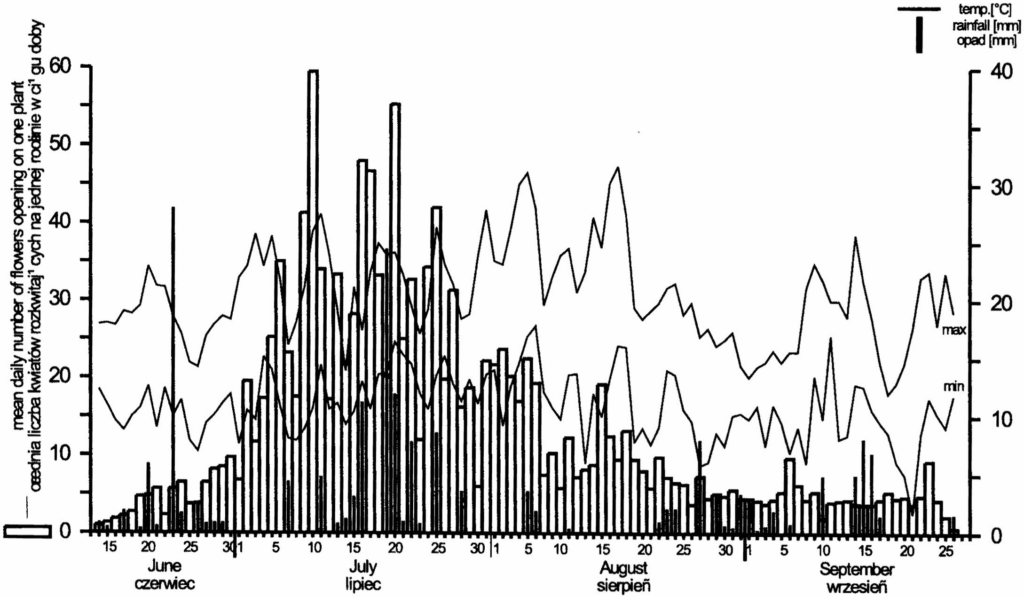
Table 1 Flowering of examined Malva species (means for the years of study) Kwitnienie badanych gatunków Malva (średnie z lat badań)
| Species / Gatunek | June / czerwiec | July / lipiec | August / sierpień | September / wrzesień | Length of flower life (days) / Długość życia kwiatu (dni) |
|---|---|---|---|---|---|
| M. crispa | ━━■ | ━━ | ━ | 0.5-1.0 | |
| M. mauritiana | ━■ | ━━ | ━━ | ━━ | 3.0-5.0 |
| M. silvestris | ━■━ | ━ | 2.0-4.5 |
■ full of blooming – pełnia kwitnienia
(W druku pole „Period of species flowering / Okres kwitnienia gatunku” nie zawiera liczb — jest to rysowana pozioma belka; powyżej odwzorowano ją schematycznie, patrz Uwagi.)
The protandrous flowers of the examined species are typical of Malvaceae family. They have similar structure and consist of fivefold perianth. Numerous stamens that grow together constitute the staminal tube surrounding multilocular pistil (Tab.2). M. crispa, developing the smallest flowers among the examined species, produced both a low number of stamens (10.1) and a low number of carpels in pistil (10.8) per one flower. The other two species produced much bigger flowers with more numerous stamens (Tab.2).
Table 2 Some morphological flower features of examined Malva species Niektóre cechy morfologiczne kwiatów badanych gatunków Malva
| Feature Cecha | Malva crispa — min-max / min.-maks. | Malva crispa — average / średnia | Malva mauritiana — min-max / min.-maks. | Malva mauritiana — average / średnia | Malva silvestris — min-max / min.-maks. | Malva silvestris — average / średnia |
|---|---|---|---|---|---|---|
| Flower diameter (cm) / średnica kwiatu (cm) | 0.9-1.2 | 1.05 | 6.5-7.5 | 6.9 | 3.5-4.2 | 3.8 |
| number of stamens in one flower / liczba pręcików w jednym kwiecie | 9.0-11.2 | 10.1 | 68.0-71.7 | 69.8 | 39.0-56.0 | 50.3 |
| pollen grains diameter (μm) / średnica ziarn pyłku (μm) | 76.26-88.56 | 83.54 | 95.94-118.08 | 107.26 | 98.40-110.70 | 103.76 |
| number of carpels in one pistil / liczba komór nasiennych w zalążni słupka | 10.0-12.1 | 10.8 | 9.5-10.0 | 9.8 | 12.2-15.0 | 13.7 |
Malva nectaries consist of multicellular secretory hairs (Phot 1.), located at the base of the inner side of the calyx. Nectar secretion starts at the loose
strona 281bud stage of flower development, usually a few hours before the flower opens. Depending on the species and weather conditions it lasts from 1 day for M. crispa to 4 days for two remaining species. Ten flowers secreted during their life on average: M. crispa – 2.34 mg, M. mauritiana – 30.93 mg, M. silvestris – 54.70 mg of nectar containing 0.94, 9.30 and 19.02 mg of sugars respectively (Tab.3). The average sugar concentration in nectar reached 30.7-43.0%. Sugar and honey yield per 1 m2 were estimated to be from 2.1 and 2.6 g for M. crispa to 7.7 g and 9.6 g for M. mauritiana respectively. The best sugar and honey producer per 1 plant and 1 m2 was M. mauritiana (Tab.3).
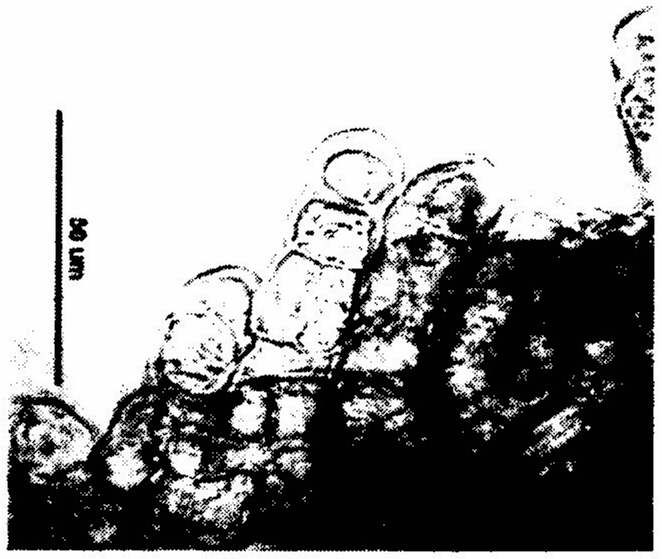
Table 3 Sugar, honey and pollen yield of three Malva species (means for the years of studies) Wydajność cukrowa, miodowa i pyłkowa trzech gatunków Malva (średnie z lat badań)
| Species / Gatunek | Sugar concentration in nectar (%) / Koncentracja cukrów w nektarze (%) — min-max | Sugar concentration in nectar (%) / Koncentracja cukrów w nektarze (%) — mean / średnia | Mass of sugar / masa cukrów — per 10 flowers (mg) / z 10 kwiatów (mg) — min-max | Mass of sugar / masa cukrów — per 10 flowers (mg) / z 10 kwiatów (mg) — mean / średnia | Mass of sugar / masa cukrów — 1 plant (g) / z 1 rośliny (g) | Mass of sugar / masa cukrów — 1 m2 (g) / z pow. 1 m2 (g) |
|---|---|---|---|---|---|---|
| M. crispa | 24.2-69.0 | 43.0 | 0.38-1.33 | 0.94 | 0.33 | 2.1 |
| M. mauritiana | 29.1-32.5 | 30.7 | 4.76-14.08 | 9.30 | 1.28 | 7.7 |
| M. silvestris | 16.9-52.7 | 34.8 | 12.98-14.29 | 19.02 | 0.37 | 5.5 |
| Species / Gatunek | Honey efficiency g/1 m2 / Wydajność miodowa g/1 m2 | Mass of pollen / masa pyłku — per 10 flowers (mg) / z 10 kwiatów (mg) — min-max | Mass of pollen / masa pyłku — per 10 flowers (mg) / z 10 kwiatów (mg) — mean / średnia | Mass of pollen / masa pyłku — 1 plant (g) / z 1 rośliny (g) | Pollen efficiency g/1 m2 / Wydajność pyłkowa g/1 m2 |
|---|---|---|---|---|---|
| M. crispa | 2.6 | 1.00-4.32 | 2.25 | 0.79 | 5.1 |
| M. mauritiana | 9.6 | 39.04-66.05 | 52.32 | 7.19 | 43.1 |
| M. silvestris | 6.9 | 13.35-20.31 | 16.14 | 0.31 | 4.7 |
Malva flowers start releasing their pollen simultaneously with the beginning of nectar secretion. The average pollen mass produced by 10
strona 282flowers differed among the examined species (Tab. 3). The highest weight of pollen was obtained from 10 flowers of M. mauritiana (52.32 mg), the lowest from M. crispa ( 2.25 mg). Mean pollen yield per one plant and 1 m2 was also the highest for M. mauritiana (Tab. 3). The sugar and pollen yield of the examined Malvaceae strictly depended on abundance of nectar and pollen productivity, the number of flowers per plant and plant coverage per area unit.
Pollen grains of Malva are large and round with many pores and spiked exine. They have a viscid material that causes them to adhere to each other. The mean diameter of pollen grains was for the examined species as follows: M. crispa – 83.54 μm, M. mauritiana – 107.26 μm, M. silvestris – 103.76 μm (Tab. 2).
Research data have shown, that under good weather conditions Malva flowers were often visited by numerous pollinating insects. They were mainly honeybees and bumblebees, working on flowers from early morning till evening. Occasionally honeybees with pollen loads were observed on M. mauritiana blossoms. The most intensive visitation and foraging of all examined species was found at noon hours.
DISCUSSION
Flowering period of the examined Malva species lasted in Lublin climatic conditions 1.5-3.0 months and was longer then observed by Jabłoński, Kołtowski (2000). The results of investigations have shown that nectaries of Malva consist of the multicellular secretion hairs, which is in agreement with Bentley, Elias (1983) and Kulijev (1959) descriptions. Nectar secretion starts shortly before the flower opens and lasts from 1 day for M. crispa to 4 days for two remaining species. According to Jabłoński, Kołtowski (2000) nectar secretion begins simultaneously with petal opening and lasts only 1 day.
Mean weight of sugar produced by 10 flowers reached 0.94 mg for M. crispa, 9.30 mg for M. mauritiana and 19.02 for M. silvestris. The two former results could be compared with data presented by Jabłoński and Kołtowski (2000), whereas the latter one is higher than obtained by mentioned authors. The average sugar concentration in nectar varied from 30.7 to 43.0%.
Ten flowers produced on average: M. crispa – 2.25 mg, M. mauritiana – 52.32 mg and M. silvestris – 16.14 mg of pollen. In literature there are no data concerning pollen productivity of the examined Malvaceae.
CONCLUSIONS
- The examined species of Malva bloomed in Lublin climatic conditions from mid June till late September, one flower 0.5-5.0 days. The mean number of flowers developed by one plant reached from 194.0 for M. silvestris to 3510.6 for M. crispa.
- Nectar secretion depended on the species and weather conditions and it lasted 1-4 days. One flower produced on average 0.09-1.90 mg of sugars. Sugar concentration in nectar reached 30.7-43.0%. Honey yield estimated per 1 m2 was as follows: M. crispa – 2.6 g, M. silvestris – 6.9 mg, M. mauritiana – 9.6 mg.
- Mean pollen yield reached 0.22-5.23 mg per one flower. Pollen weight per 1 m2 amounted: 4,7 g – M. silvestris, 5.1 g – M. crispa, 43,1 g – M. mauritiana.
- Malva mauritiana was the best nectar and pollen producer, however all the examined species are important source of nectar and pollen flow since mid summer till autumn.
- Honeybees and bumblebees were dominant pollinators of Malva flowers.
REFERENCES
Andrejev W.N. (1926)- Pylca rastienij sobierajemaja pčolami (k metodikie izučenija piergi), Charkóv.
Bentley B., Elias T.(1983)- The biology of nectaries. Columbia University Press, New York.
Bolchi Serini G., Salvi G. (1986)- Contributo alla conoscenza dell’etologia di Apis mellifera L. nelle reccolta di polline. Apicolt. mod. 77: 195-202.
Demianowicz Z., Hłyń M., Jabłoński B., Maksymiuk I. Podgórska J., Ruszkowska B., Szklanowska K., Zimna J. (1960)- Wydajność miodowa ważniejszych roślin miododajnych w warunkach Polski. Część I. Pszczeln. Zesz. Nauk., 4(2): 87-104.
Hoves F.N. (1979)- Plants and Beekeeping. An account of those plants, wild and cultivated, of value to the hive bee, and for honey production in the British Isles. London.
Jabłoński B. (1961)- O wartości pszczelarskiej niektórych roślin z rodziny ślazowatych. Pszczelarstwo, 12(7): 10-12.
Jabłoński B., Kołtowski Z. (2000)- Nektarowanie i wydajność cukrowa 4 gatunków ślazu (Malva L.). Pszczeln. Zesz. Nauk., 44 (supl. do nr 1): 35-37.
Krotoska T. (1958)- Pory roku w życiu roślin . Obserwacje fenologiczne w zespołach roślinnych . PWN, Poznań.
Kulijev A. M. (1959)- Morfołogičeskaja evolucija nektarnikov u pokrytosemjannych rastienij. Kirovobad.
Warakomska Z. (1972)- Badania nad wydajnością pyłkową roślin. Pszczeln. Zesz. Nauk., 16: 63-90.
Warakomska Z. (1999)- Rośliny ogrodowe i ruderalne w obrazie pyłkowym obnóży pszczelich. Bibl. Fragm. Agron. T. 6/99: 137-144.
strona 284KWITNIENIE I WARTOŚĆ PSZCZELARSKA TRZECH GATUNKÓW MALVA L.
Wróblewska A.
Streszczenie
Badania prowadzone w latach 1993-1999 dotyczyły trzech gatunków z rodzju Malva L. Były to: M. crispa L., M. mauritiana L. i M. silvestris L. Obserwacjami objęto fenologię i obfitość kwitnienia oraz wartość pszczelarską – nektarowanie i wydajność pyłkową, a także oblot kwiatów malw przez owady. Szczegółową dynamikę rozkwitania kwiatów przeprowadzono dla M. mauritiana w sezonie wegetacyjnym 1993. W badaniach biologii kwitnienia zastosowano znaki fenologiczne Krotoskiej (1958). Zebrano kwiaty poszczególnych gatunków, a następnie określono ich cechy morfologiczne. Nektarowanie zbadano metodą pipetową Demianowicz i inni (1960), a wydajność pyłkową zmodyfikowaną metodą eterowo-wagową Warakomskiej (1972).
W warunkach klimatycznych Lublina kwitnienie badanych gatunków trwało 1,5-3,0 miesięcy. Najwcześniej, w połowie czerwca, rozpoczynała kwitnienie M. mauritiana, która kwitła najdłużej. Dwa pozostałe gatunki wytwarzały pierwsze kwiaty w ostatnim tygodniu czerwca i kwitły: M. silvestris do połowy sierpnia, M. crispa do pierwszych dni września. Długość kwitnienia jednego kwiatu trwała, w zależności od gatunku i warunków pogody, 0,5-5,0 dni. W sezonie wegetacyjnym jedna roślina wytworzyła średnio następujące ilości kwiatów: M. crispa – 3510,6, M. mauritiana – 1374,0, M. silvestris – 194,0.
Przedprątne kwiaty badanych gatunków są typowe dla rodziny Malvaceae. Liczne pręciki zrośnięte są nitkami w rurkę pręcikową otaczającą wielokomorowy słupek. M. crispa, wytwarzająca wśród badanych gatunków kwiaty o najmniejszej średnicy, charakteryzowała się najmniejszą liczbą zarówno pręcików (średnio 10,1) jak też komór nasiennych (10,8) w jednym kwiecie. Dwa pozostałe gatunki wytwarzały kwiaty o znacznie większej średnicy oraz liczbie pręcików.
Nektarniki Malva mają postać wielokomórkowych włosków wydzielniczych, które zlokalizowane są u podstawy wewnętrznej strony działek kielicha. Sekrecja nektaru rozpoczyna się w stadium luźnego pąka, na krótko przed rozchyleniem się płatków korony i trwa, w zależności od gatunku i warunków pogody, 1-4 dni. W ciągu swego życia 10 kwiatów wydzieliło średnio: M. crispa – 2.34 mg, M. mauritiana – 30,93 mg, M. silvestris – 54,70 mg nektaru zawierającego odpowiednio 0,94, 9,30 i 19,02 mg cukrów. Koncentracja cukrów w nektarze badanych gatunków wahała się w granicach 30,7-43,0%. Wydajność cukrowa i miodowa z powierzchni 1 m2 wyniosły odpowiednio: M. crispa – 2,1 g i 2,6 g M. mauritiana – 7,7 g i 9,6 g, M. silvestris – 5,5 g i 6,9 g.
Kwiaty Malva rozpoczynają pylenie równocześnie z początkiem nektarowania. Ziarna pyłku badanych gatunków są duże, okrągłe, z licznymi porami i kolczastą egzyną, o średnicy 83,54-107,26 μm. Wydajność pyłkowa z 10 kwiatów oraz z powierzchni 1 m2 osiągnęły dla badanych gatunków następujące wartości: M. crispa – 2,25 mg i 5,1 g, M. mauritiana – 52,32 mg i 43,1 g, M. silvestris – 16,14 mg i 4,7 g.
W sprzyjających warunkach pogody rośliny odwiedzane były przez różne owady, które pracowały na kwiatach od wczesnych godzin rannych aż do wieczora. Wśród zapylaczy dominowały pszczoły miodne i trzmiele.
Słowa kluczowe: Malva, kwitnienie, nektarowanie, wydajność pyłkowa.
Errata — błędy druku znalezione podczas digitalizacji
- s. 277, streszczenie: „begining” → beginning
- s. 277, 283: „Hoves” → Howes
- s. 278: „at al.” → et al.
- s. 282: „longer then” → longer than
- s. 283: „6.9 mg” → 6.9 g
- s. 283: „9.6 mg” → 9.6 g
- s. 283, piśmiennictwo: „reccolta” → raccolta
- s. 284, streszczenie: „rodzju” → rodzaju