

THE ATTRACTIVENESS OF 5 CULTIVATED CROPS TO BEES AND A MIXTURE OF ANNUAL PLANTS FOR FLOWER VISITING INSECTS
tekst: Christoph Hedtke
Pszczelnicze Zeszyty Naukowe, Rok XL, 1996 — Christoph Hedtke
strona 219PSZCZELNICZE ZESZYTY NAUKOWE Rok XL, Nr 2 1996
Christoph Hedtke
Laenderinstitut für Bienenkunde Hohen Neuendorf e.V.
Friedrich-Engels-Str. 32, D-16540 Hohen Neuendorf GERMANY
Summary
The aim of this investigation was 1. to test the attractiveness of different cultivated crops to bees and 2. to develop a seed mixture specially for poor and sandy soil in order to improve bee forage considerably on arable land. We started to develop and test seed mixtures specially adapted to the conditions for poor and sandy soil, too. This seed mixture is well accepted by farmers, beekeepers and even hunters.
Key words: attractiveness, cultivated crop, pollinators
INTRODUCTION
Modern practice in agriculture resulted in a dramatic decline of pollen and nectar sources for honeybees and wild bees on arable land. At the end of winter, rape blossom – around the middle or end of May – there are only a few crops for bee forage in the countryside. These crops are either harvested before their blooming period, or they are cultivated in such small plots, that, if at all, only the foragers of few honeybee colonies can forage on the blossoms. Consequently, most beekeepers move their beehives at the end of May from the arable land to the villages or cities. At these locations. bees can forage on Robinia pseudoacacia, Tilia sp. or other plants. Nearly 10 years ago the European Commission started the set-aside land programme to reduce overproduction of food crops. In 1994 for example 1.600.000 ha of land were set aside in Germany (A I D 1995). This part of the agricultural landscape can provide forage for bees by sowing flower mixtures. When executing this program, honey bee colonies need not be fed in summer in arable sites. Instead, honey bees are able to forage throughout spring, summer and even early autumn. Bauer (1987; 1991) and Bauer and Engels (1992) developed a seed mixture of entomophilous plants, which we tested in different areas on sandy soil in Brandenburg. However, some of the seeds did not germinate. Other plants were underrepresented in the mixture (lower than 1 %) and therefore they were hardly visited by bees. These reasons forced us to develop another suitable seed mixture.
strona 220The main aim of this investigation was 1. to test the attractiveness of different cultivated crops to bees and 2. to develop a seed mixture specially for poor and sandy soil in order to improve bee forage considerably on arable land.
MATERIALS AND METHODS
- In spring Borago officinalis (borage), Sinapis alba (mustard), Phacelia tanacetifolia (phacelia), Fagopyrum esculentum (buckwheat) and Brassica napus (summer rape) were sown side by side at the same location. At this location, parameters like period of time till blooming, length of blooming period, species of insects visiting the blossoms and their frequency of visitation at 4 different times of day by transect counts (Mühlenberg 1993) were analysed. Furthermore sunny locations were compared with those in shade. Honeybee hives were placed near by.
- In addition to this experiment we started to develop and test seed mixtures specially adapted to the conditions for poor and sandy soil. The density of seed in all experiments was 7 kg seed mix per ha. Sowing time was during May.
In addition to the parameters mentioned above honey samples were taken and pollen analysis was done to determine the foraging rates of honeybees in the experimental area.
RESULTS AND DISCUSSION
The time up to blooming varied between 39 days for Sinapis and 56 days for Borago. Borage, phacelia and buckwheat were remarkably longer in blossom (36-46 days) than the other plants producing flowers for a period of 18-23 days. Sinapis was in blossom twice from 1st till 12th of July and from July 23rd till 31th respectively. The highest bee density on borage is monitored at 3 p.m. and for phacelia at 1 p.m. Mustard, buckwheat and summer rape are mostly visited at 10 a. m. by bees. In shady locations, the maximum of bees foraging on Sinapis or Phacelia appears two hours later compared to sunny areas (see Table 1).
strona 221Table 1 Development of plants and hour of bees’ maximum
| Days until in blossom | Days in blossom | Time with highest density | |
|---|---|---|---|
| Borago | 56 | 42 | 15 |
| Brassica | 52 | 18 | 10 |
| Fagopyrum | 51 | 36 | 10 |
| Sinapis (Su) | 44 | 23 | 10 |
| Sinapis (Sh) | 39 | 19 | 13 |
| Phacelia (Su) | 47 | 41 | 13 |
| Phacelia (Sh) | 50 | 46 | 15 |
During the whole period of research insect density in general was highest at borage and phacelia. In total, the percentage of visits by honeybees differed between 67,4 % for buckwheat and 94 % for borage (see Fig. 1). The percentage of visiting bumblebees was between 0,4 % for mustard and 12 % for phacelia and such of other insects between 1,5 % for borage and 29,6 % for buckwheat.
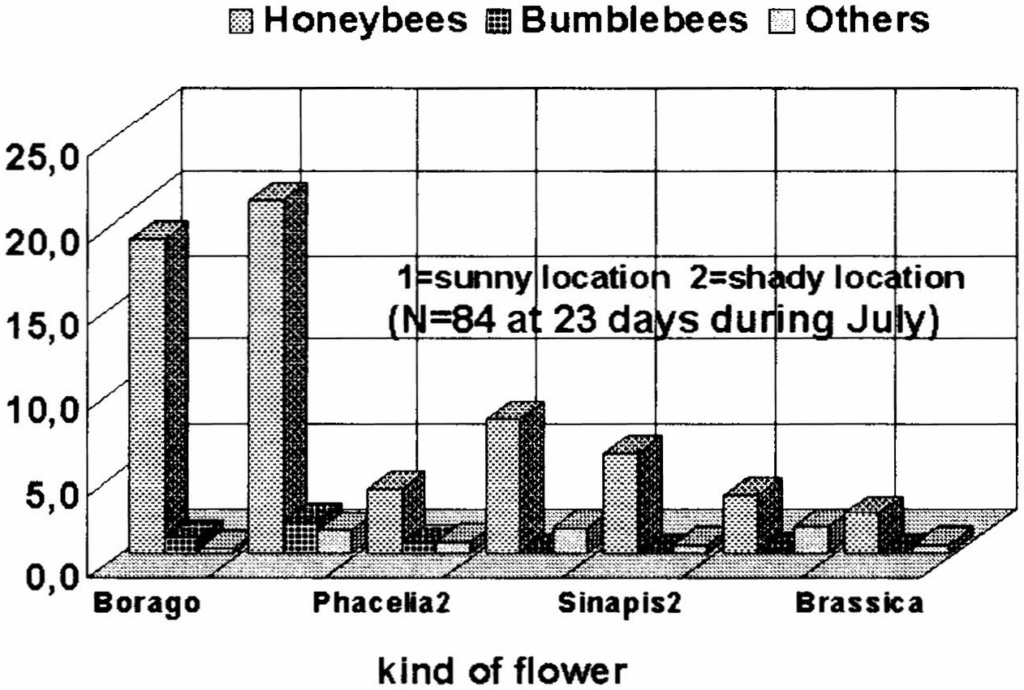
Fig. 1. Insect density at different plants per ha (in comparison)
strona 222Honeybees prefer borage and phacelia over mustard, buckwheat and summer rape. Syrphid-flies and other flies are mainly visiting Fagopyrum and Sinapis. Different species of solitary bees often collect pollen on mustard.
Insect density decreased remarkably at the shady locations. On average 24200 insects/ha were counted on phacelia in sunny locations, but only 5100 in shady ones (p < 0.0005). The reduction of insects foraging on Sinapis was about 30 % in the shady area compared to the sunny one (p < 0.02). The highest density of foraging insects differed between sunny and shady areas as well as between the species of plants. Ambient temperature and insect density were significantly correlated only for borage (r= .44; p < 0.0001) and phacelia (r= .60; p < 0.00005) but not for summerrape (r= .24; p > 0.198), mustard (r= .05; p > 0.685) and buckwheat (r= -.11; p > 0.339) (see Fig. 2).
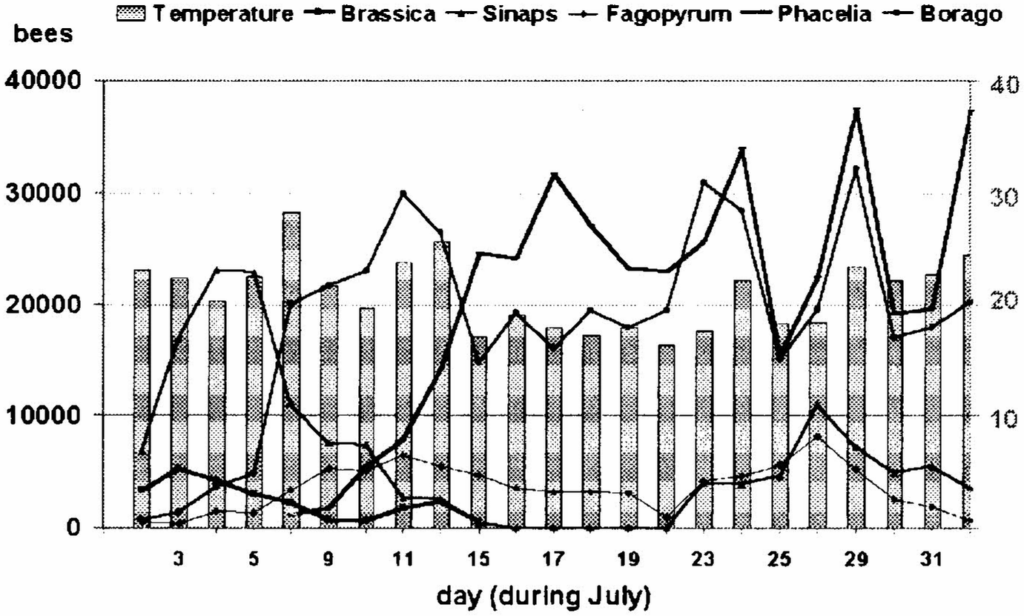
Fig. 2. Foraging rates of honeybees per ha and ambient temperature
These and other results (Becker 1994; Becker and Hedtke 1995; Hedtke and Pritsch 1992; Podsiadlowski et al. 1996), as well as tests on differing arable land, led to a mixture of seeds containing Phacelia tanacetifolia (20 %), Fagopyrum esculentum (27 %), Sinapis alba (14 %), Raphanus sativus (14 %), Borago officinalis (9 %), Ornithopus sativus (9 %), Malva sylvestris (2 %) and Helianthus annuus (5 %) (% related to weight). These plants grow even on poor and sandy soil.
strona 223It is well known, that plants of different species sown in a mixture are longer in blossom than the same plants sown in pure rows. The flowering period of this seed mixture lasts for 2 to 2.5 months, sometimes even for 3 months. This seed mixture is a good pollen and nectar supply during summer and autumn especially for honeybees, bumblebees, and flies (mostly syrphid-flies) (see Fig. 3). Honeybee density reached its maximum between 1 and 3 p.m. with 80.000 per ha under good weather conditions. Therefore it is recommened to place 4 to 5 colonies of honey bees per ha at the edge of the field. But, honeybees from colonies in a distance of 3 km were foraging in the test fields as well. Pollen analysis of honey samples indicated a foraging rate of 76-84 % at the flowers in the seed mixture. 10-15 kg honey/colony -depending on weather and soil conditions- can be harvested or left in the hives as food for overwintering.
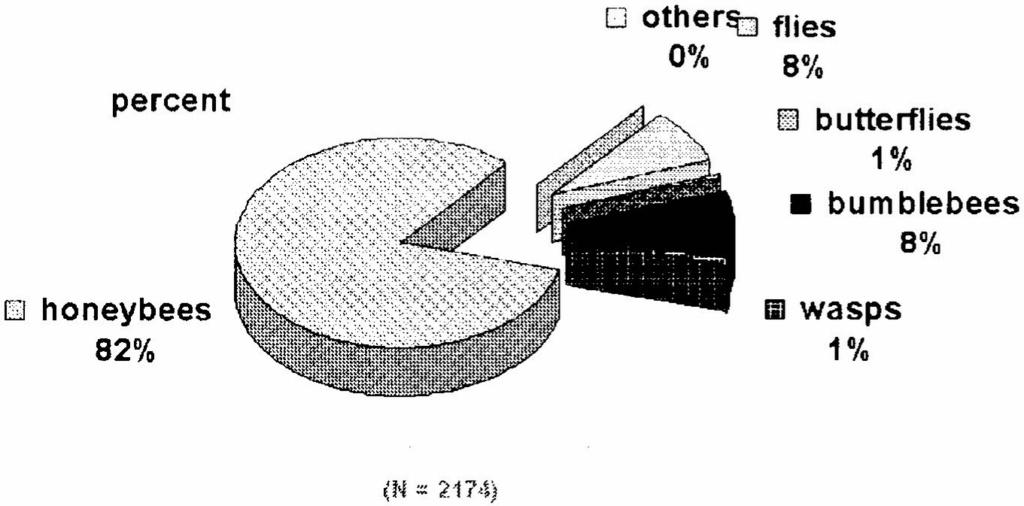
Fig. 3. Flower visiting insection on the plant mixture
CONCLUSIONS
This seed mixture at hand farmers and beekeepers can improve the habitats for flower visiting insects in the set-aside land. The long flowering period of the plant mixture fills the gap of pollen and nectar sources between the end of winter-rape blossom and the blooming time of sunflower
strona 224on arable land. Using the set-aside land in this way a permant beekeeping in agriculture is made possible again. Other beneficial effects of the seed mixture are for example: low in price, a rather low level of herbs in the set-aside land, an improvement of the quality of soil and an excellent feeding ground for birds and game. Therefore this seed mixture is therefore well accepted by farmers, beekeepers and even hunters.
REFERENCES
A I D (1995) – Agrarbericht 1995. AID-Informationen für die Agrarberatung 3 (1). 168 pp.
Bauer M. (1987) – Bienenweide in der Feldflur: Maßnahmen zur Trachtverbesserung und die Trachtnutzung durch Carnica-Völker. Dissertation. AS-Verlag, Tübingen. 292 pp.
Bauer M. (1991) – Preliminary results of sowing plants as pasture for bees on former ploughland. Apidologie 22 (4): 428-430.
Bauer M., Engels W. (1992) – The utilization of the pasture for bees on former ploughland by wild bees. Apidologie 23 (4): 340-342.
Becker K. (1994) – Die Nutzung einer speziellen Bienenweidemischung durch Wildbienen und Honigbienen auf Brandenburger Stillegungsflächen. Diplomarbeit FU Berlin FB 23. 132 pp.
Becker K., Hedtke C. (1995) – Foraging of wild bees and honey bees on a mixture of entomophilous plants on extensification areas. Apidologie 26 (4): 344-346.
Hedtke C., Pritsch G. (1992) – Qualitative and quantitative investigation of insects foraging on buckwheat (Fagopyrum esculentum Moench). Apidologie 24 (5): 476-477.
Mühlenberg M. (1993) – Freilandökologie. Quelle & Meyer, Heidelberg. 512 pp.
Podsiadlowski L., Hedtke C., Schricker B. (1996) – Aculeate Hymenopterans on bee meadows, fallow land and in a suburban environment. Apidologie 27 in press.
PORÓWNANIE ATRAKCYJNOŚCI PIĘCIU ROŚLIN POŻYTKOWYCH DLA PSZCZOŁY MIODNEJ
Ch. Hedtke
Streszczenie
Ogórecznik (Borago officinalis), gorczyca (Sinapis alba), facelia (Phacelia tanacetifolia), gryka (Fagopyrum esculentum) i rzepak jary (Brassica napus) wysiano w czystych kulturach obok siebie. Określano czas zakwitnięcia i długość fazy kwitnienia oraz liczbę zapylaczy odwiedzających kwiaty, w czterech porach dnia. Porównano również stanowiska nasłonecznione z zacienionymi. Ogórecznik, facelia i gryka (36-46 dni) kwitły dłużej niż pozostałe rośliny (18 – 23 dni). Na ogóreczniku i facelii stwierdzono najwyższe zagęszczenie owadów zapylających, a udział pszczoły miodnej wahał się od 67,4% na gryce do 94% na ogóreczniku. Udział trzmieli wahał się w przedziale od 0,4% na gorczycy do 12% na facelii, a pozostałych owadów -1,5 % na ogóreczniku i 29,6% na gryce. Obserwowano spadek liczby zapylaczy w miejscach zacienionych, a liczba
strona 225owadów zapylających uzależniona była zarówno od rodzaju rośliny, jak i stopnia jej nasłonecznienia. Stwierdzono ponadto pozytywną korelację pomiędzy temperaturą a gęstością zapylaczy na ogóreczniku i facelii.
Słowa kluczowe: atrakcyjność, rośliny pożytkowe, zapylacze
Errata — błędy druku znalezione podczas digitalizacji
- s. 220: „31th” → 31st
- s. 222: „summerrape” → summer rape
- s. 222, ryc. 2: „Sinaps” → Sinapis
- s. 223: „recommened” → recommended
- s. 223, ryc. 3: „insection” → insects
- s. 224: „permant” → permanent