

A SMALL HIVE BEETLE AETHINA TUMIDA – A NEW BEEKEEPING PEST
tekst: Zdzisław Gliński
Pszczelnicze Zeszyty Naukowe, Rok XLIV, Nr 2, 2000 — Zdzisław Gliński
strona 179PSZCZELNICZE ZESZYTY NAUKOWE Rok XLIV, Nr 2 2000
Zdzisław Gliński
Department and Clinic of Infectious Diseases, Faculty of Veterinary Medicine, University of Agriculture, Akademicka 12, 20-033 Lublin, POLAND e-mail: glinski@agros.ar.lublin.pl
Summary
The small hive beetle Aethina tumida Murray (Coleoptera: Nitidulidae) is a new pest attacking honey bees (Apis mellifera) in the USA since 1998. A. tumida is a native of tropical and subtropical Africa where it attacks weakened colonies and combs in storage of A. m. scutellata and A. m. capensis. The beetles invade bee colonies and lay eggs inside. Both larvae and adults feed on brood, pollen, wax, honey, and damage brood and honeycomb. When small hive beetle infestations are heavy, even in strong colonies, queens will stop laying eggs and the bees often abscond. The mature larvae enter soil to pupate. The duration from egg to adult is about 38-81 days. The first line of defence against the small hive beetle is sanitation in the bee yard and honey house. Coumaphos bee strips are approved for use in hives for the control of A. tumida. The fumigation of stored combs with p-dichlorobenzene provides sufficient control.
Keywords: Aethina tumida, small hive beetle, Apis mellifera.
INTRODUCTION
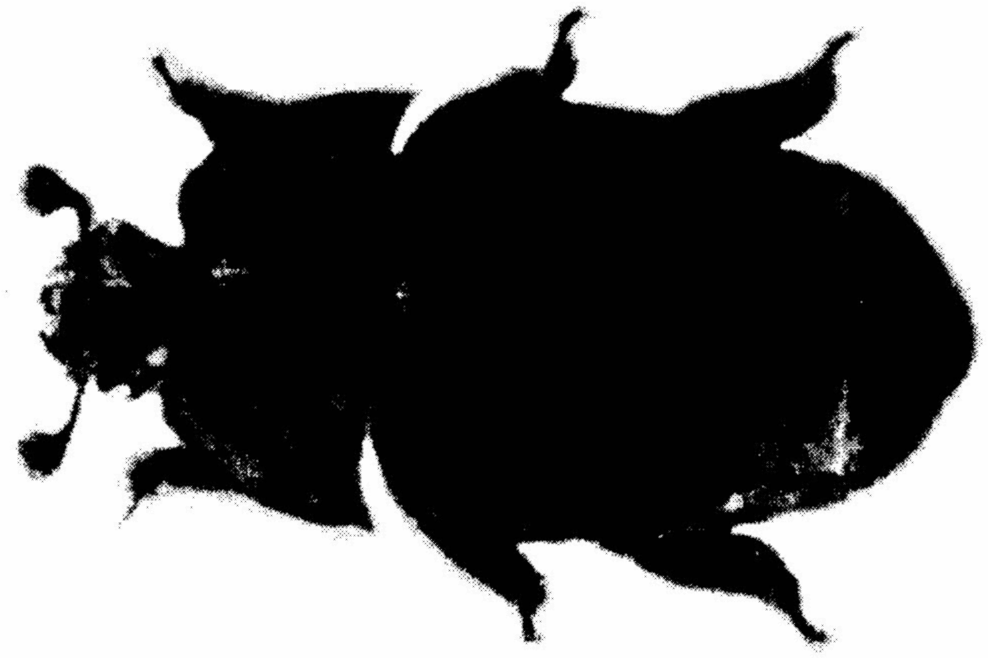
The small hive beetle Aethina tumida Murray (Coleoptera: Nitidilidae) (Fig. 1) has infested bee colonies in sub-Saharan Africa for many years. However, it is rarely a significant pest with African bees and it rarely destroys colonies. It is also a scavenger, but there is little evidence it attacks any stage of the honey bee`s life cycle. In South Africa where Apis mellifera scutellata predominates, the beetle attacks small or weak hives but rarely affects strong hives. It is known that African bees in the face of predation or perturbation readily abscond leaving behind a nest heavily infested. Moreover, the workers remove the beetle larvae and keep them in check (Buys 1974).
A. tumida was identified for the first time in the Western hemisphere from honey bee colonies in Florida USA in June 1998. It is suggested that migratory beekeepers in Florida spread the beetle to approximately 20 states (Sanford 1998). The effects of this pest on US beekeeping, where Apis mellifera ligustica or A. m. carnica predominate, are tremendous. The small hive beetle is an indirect pest of honey bees, affecting the combs and stored honey directly (Zachary 1999). It is reasonable to assume that the small hive beetle
strona 180creates a greater threat to beekeeping than Tropilaelaps clareae (Gliński and Kostro 2000).
LIFE CYCLE OF THE BEETLE
The small hive beetle undergoes a complete metamorphosis, passing through the egg, larva, pupa and adult stages (Zachary 1999). It spends the egg, larval, and adult stages inside the beehive but pupates in the soil. The eggs of the beetle, deposited in irregular masses, are pearly-white, 0.26 x 1.4 mm in size, similar in appearance to honey bee eggs but smaller. The female appears to prefer some crevices or cavities in the hive. Eggs are laid in concealed areas and empty cells and larvae seek out pollen and honey to feed upon. The incubation period ranges from 1 to 6 days, with most hatching between 2 to 4 days. The adult beetles can lay their eggs on fruit such as strawberries, but fruit does not appear to be their preferred diet.
Larvae 10-11 mm in length (Fig. 2) emerge from the egg shell through a longitudinal slit. They feed on pollen and honey, damaging combs, and require 10-16 days to mature. Larvae that are ready to pupate leave the hive and burrow into soil near the hive. As they leave the hive through the various openings and cracks, the exterior of the hive may become discoloured, particularly in a heavy infestation. The beetle larvae can easily be distinguished from the greater wax moth larvae, Galleria mellonella, by the presence of six prominent anterior legs. The wax moth larva has a number of smaller uniform prolegs (Delaplane 1999).
In newly formed pupae predominates a pearly white colour. Pigmentation begins with the transformation to adults. The pupation period is from15 to 60 days and the majority of beetles emerge after 3-4 weeks in the ground as adults with six legs and two pair of wings. Pigmentation begins with the transformation to adults.
strona 181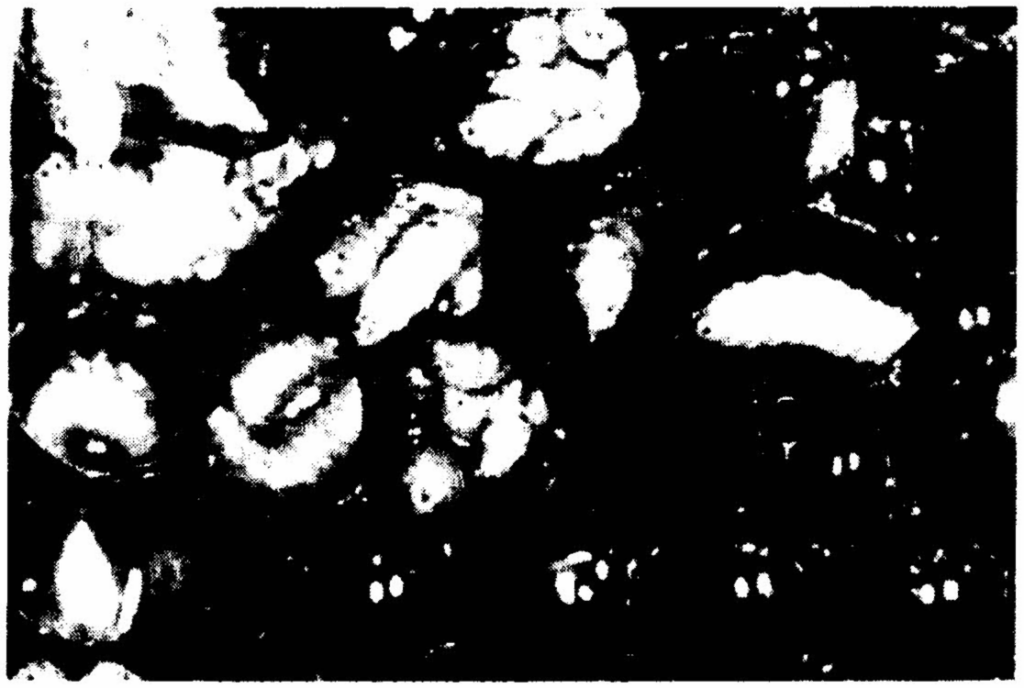
The newly matured beetles are light in colour but when full mature become dark brown and finally black. Their size is from 5 to 7 mm in length, they are covered with fine hair. During the first day or two after emergence, young beetles are active. They take flight oriented toward light. Adults can fly up to 15 miles to find a colony. In South Africa the beetles require 38-81 days to develop from eggs to adults. Five generations for year are possible (Buys 1974, Caron 1977). The life span of A. tumida lasts from few days to six months. A. tumida is active only during the summer season. The female begins to lay eggs about 1 week after emergence. The adults rapidly run across the combs and can often be found hiding in places that are not accessible to larger-bodied honey bees.
THE DAMAGE
In Africa the beetle is mostly a scavenger of weakened bee colonies, but in the USA it causes considerable damage and losses in bee colony result. The beetle can also attack and disrupt bumble bee colonies (Stanghellini et al. 2000). The adult beetles may consume their own eggs and even larvae (Anonymous 1999).
The beetles often attack stored combs, honey awaiting extraction, and cappings which are being held before rendering. Their favourite food is brood. Disturbed bees do not guard the brood nest and the larvae tunnel beneath the capping. A. tumida larvae tunnelling through combs kill brood and ruin combs. Bees are not available to remove either larvae or adults from the colony. When the number of beetles reaches a certain level, honey-bee brood – rearing stops. The beetles defecate in honey and cause it to ferment. This odour in a honey room is usually the first warning to a beekeeper of the
strona 182presence of active larvae of the small hive beetle in supers. Fermented honey smells like rotting oranges. It can be used as bee food. Damage and fermentation cause the honey to run out of combs, creating a mess in hives or extracting rooms.
The major economic damage appears to be done by larvae found in unprotected honey supers. The infestation of honey filled supers can happen very quickly. Larvae by the thousands crawl out of colony entrances or across honey house floors in an effort to reach soil to dig in and complete their development. When small hive beetle infestations are heavy, even in strong colonies, the queens will stop laying eggs and the bees often abscond.
THE DIAGNOSIS OF INFESTATION
To detect the presence of the small hive beetle the most important is (Delaplane 1999, Sanford 1999):
— a careful examination the frass the bottom boards or the cardboard inserts, often after the use of Coumaphos impregnated plastic strips;
— a thorough examination of combs and honey supers in storage;
— the presence of an odour of decaying oranges from fermenting honey
— monitoring the presence of adult beetles that rapidly run across the combs and their larvae on combs the bottom board of the hive
— a heavy infestation causes the bees to abscond.
PREVENTION AND CONTROL
If the small hive beetle is suspected or detected, the first line of defence is sanitation in the bee yard and honey house. Filled supers may stand only a short time before extraction. Relocating bee colonies may break the beetle’s life cycle. Close attention must be paid when supering colonies, when making splits or when exchanging combs-these provide room for the beetle to be established away from the cluster of protective bees. Monitoring colonies for hygienic behaviour is necessary. Propagation queen lines found to be beetle resistant is made. Stacking or storing infested supers on strong colonies must be prohibited. The pupae of the beetle in the soil should be destroyed by muriate of potash or boric acid (Caron 1997). It is well documented that freezing honey in the comb kills beetles eggs and larvae. Larvae may not pupate effectively in too dry, sandy or wet conditions (Buys 1974, Caron 1997, Sanford 1998). Stationary colonies are more vulnerable than those that are moved about. Thus relocating colonies may break the life cycle of the beetle. Every apiary, which supplies either queen bees or package bees, should be tested for the small hive beetle. The proper border protection is an extremely important first line of defence against the introduction of exotic diseases and pests. The officers (veterinarians) stationed at ports, airports and
strona 183border check points should carry out either surveillance for queen bees or an examination of package bees.
The chemical control of beetles is problematic. The parasite may be controlled in the colony and/or pupae in soil. CheckMite+ (coumaphos) and GardStar (40% permethrin) have been authorized by the Environment Protection Agency (EPA). Honey supers must be removed before applying these material as plastic strips stapled onto the cardboard inserts. The supers may be replaced after 14 after the strips have been removed. Colonies should be treated not more than four times per year for the small hive beetle. Coumaphos and permethrin give 100% mortality of adult and larval beetles. A formamidine, an γ-aminobuthyric acid agonist, gives less than optimal mortality. Paradichlorobenzene has been used for protecting empty stored combs (Sanford 1998).
The small hive beetle can easily be transported in nucs and packages. Therefore the parent colonies must be treated with coumaphos before making up nucs and packages.
CONCLUSIONS
The small hive beetle Aethina tumida is now a great threat to beekeeping in USA. The pest affects bee brood, the combs and stored honey and pollen directly. The beetles can be controlled using chemicals. Unfortunately, the use of chemicals is not usually legal and improper use of many chemicals could easily kill bees as well as beetles. The fact that the beetle must pupate in the soil appears to open new possibilities as a control tactic of this pest. Soil treatments, including chemicals, nematodes or Bacillus thuringiensis toxins givee most promise for the future. There is no need to contemplate treatment unless the beetle has been detected. Beekeepers should constantly monitor the colonies for the presence of the beetle in those areas, wherey the infestation of the beetle is suspected. Since beekeepers in Europe manage different races of honey bees from those in South Africa, the effects of A. tumida on European beekeeping are largely unknown.
REFERENCES
Anonymous. (1999)- The small hive beetle. Download Bee Aware Newsletter, 80, 1-3.
Buys B. (1975)- A survey of honeybee pests in South Africa,. Proc. First Society of South Africa, Stellenbosch 1974, s. 185-189.
Caron D.M. (1997)- Other insects, W: Honey bee, pests, predators and diseases. Red. R.A. Morse., K. Flottum. A.I. Root Co., Mediona, Ohio.
Delaplane K.S. (1999)- The small hive beetle (Aethina tumida). Bugwood Publ. New York.
strona 184Gliński Z., Kostro K. (2000)- Tropilaelaps clareae zagrożeniem dla pszczoły miodnej ? Medycyna Wet., 56. In press.
Sanford M.T. (1998)- Aethina tumida: a new behive pest in the western hemisphere;adres int.:http://www.ifas.ufl.edu/~mts/apishtm/apis98/apjul98.htm#1
Sanford M.T. (1999)- Small hive beetle topics. APIS, 7, 1-7.
Stanghellini M.S., Ambrose J.T., Hopkins D.J. (2000)- Bumble bee colonies as potential alternative hosts for small hive beetle (Aethina tumida Murray)., Amer. Bee J., 140, 71-75.
Zachary H. (1999)- Small hivbe beetle (Aethina tumida) now in Michigan. Entomology, 26, 345-350.
MAŁY CHRZĄSZCZ ULOWY AETHINA TUMIDA NOWE ZAGROŻENIE DLA PSZCZELARSTWA
Gliński Z.
Streszczenie
Mały chrząszcz ulowy Aethina tumida Murray (Coleoptera: Nitidulidae) jest nowym zagrożeniem pszczoły miodnej Apis mellifera w USA od 1998 r. Występuje on w Afryce subtropikalnej i tropikalnej w słabych rodzinach oraz w przechowalniach plastrów A. m. scutellata i A.m.capensis. Chrząszcz zasiedla rodziny, składa jajeczka. Zarówno larwy jak i dojrzałe postacie jedzą czerw, pyłek, wosk i miód, uszkadzają czerw i woszczynę. Przy dużym nasileniu inwazji giną nawet silne rodziny, ustaje czerwienie matki, pszczoły często opuszczają ul. Dojrzałe larwy ulegają przepoczwarczeniu w glebie. Całkowity rozwój chrząszcza trwa od 38 do 81 dni. Zwalczanie inwazji polega na przestrzeganiu higieny w pasiece i w ulu. Ze środków chemicznych zalecany jest kumafos. Odymianie plastrów p-dichlorobenzenem niszczy chrząszcze i ich postacie rozwojowe.
Słowa kluczowe: Aethina tumida, mały chrząszcz ulowy, Apis mellifera.
Errata — błędy druku znalezione podczas digitalizacji
- s. 179: „Nitidilidae” → Nitidulidae
- s. 181, ryc. 2: „doacs.state.tl.us” → doacs.state.fl.us
- s. 183: „aminobuthyric” → aminobutyric
- s. 183: „givee” → give
- s. 183: „wherey” → where
- s. 183, piśmiennictwo: „Mediona” → Medina
- s. 184, piśmiennictwo: „behive” → beehive
- s. 184, piśmiennictwo: „hivbe” → hive