

MITES AND BEES – AN HISTORICAL VIEW
tekst: Richard A. Baker
Pszczelnicze Zeszyty Naukowe, Rok XLIV, Nr 2, 2000 — Richard A. Baker
strona 109PSZCZELNICZE ZESZYTY NAUKOWE Rok XLIV, Nr 2 2000
Richard A. Baker
School of Biology, University of Leeds, Leeds, LS2 9JT, UK
Summary
An historical review considers the early workers on mites associated with honey bees. Oudemans in 1904 was the first person to describe Varroa jacobsoni Oud. and Rennie and his team in the early 1920’s reported and worked on Acarapis woodi (Rennie). Biographical information is provided on Oudemans and Rennie. More recently, Delfinado and Baker have described new mites from bees, adding to the list of those occurring on the genus Apis. Reference is made to the discovery and spread of Varroa in Europe.
Keywords: Apidae, honey bees, history, mites, parasites.
Although the Varroa mite, Varroa jacobsoni Oud. has attracted most attention over the past thirty to forty years, there are many other genera and species of mite associated with bees. The discovery and role as agents of disease, of bee mites is presented here in an historical perspective.
The three main mite species threatening the survival of honey bees are A. woodi (Rennie), Tropilaelaps clareae Delfinado et Baker and V. jacobsoni Oud. with the latter considered the major threat in most parts of the world, causing the condition known as varroasis.
The honey bee tracheal mite (HBTM) A. woodi lives in the tracheae and air sacs of adult bees where it feeds and reproduces. If unchecked it can reach high numbers, when the breathing tubes become blocked and the bees are unable to fly. Infestation spreads by direct contact between bees. Drones, workers and queens may be infested. The honey bee, Apis mellifera L., the Africanized honey bee, A. m. scutellata Lepeletier and the eastern honey bee, Apis cerana F., are the known hosts of this parasite.
This mite was first described in 1921 by a Scottish scientist, John Rennie when he and his group were searching for the cause of Isle of Wight disease in honey bees. Rennie named the mite, Tarsonemus woodi but Hirst (1921) corrected this and changed the name to Acarapis woodi in the same year.
John Rennie (1865-1928) was born in Aberdeen, Scotland in 1865, graduating from the University in his home town in 1898. He later became lecturer in Parasitology at the University and also lectured in the North of Scotland College of Agriculture. Research interests in various branches of science included early work on a potential cure for diabetes but it was his research on bee diseases and in particular Isle of Wight disease which brought
strona 110him into greater prominence. The honey bee tracheal mite described by Rennie was actually discovered by one of his co-workers, Bruce White, as Rennie always insisted. More recently it has been shown that the mite is not the cause of Isle of Wight disease. Rennie died on the 30th August 1928.
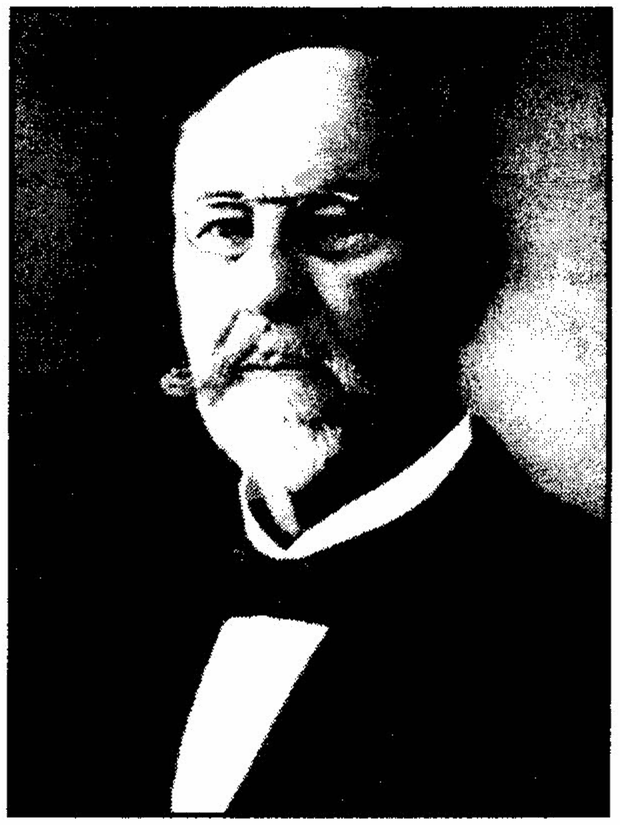
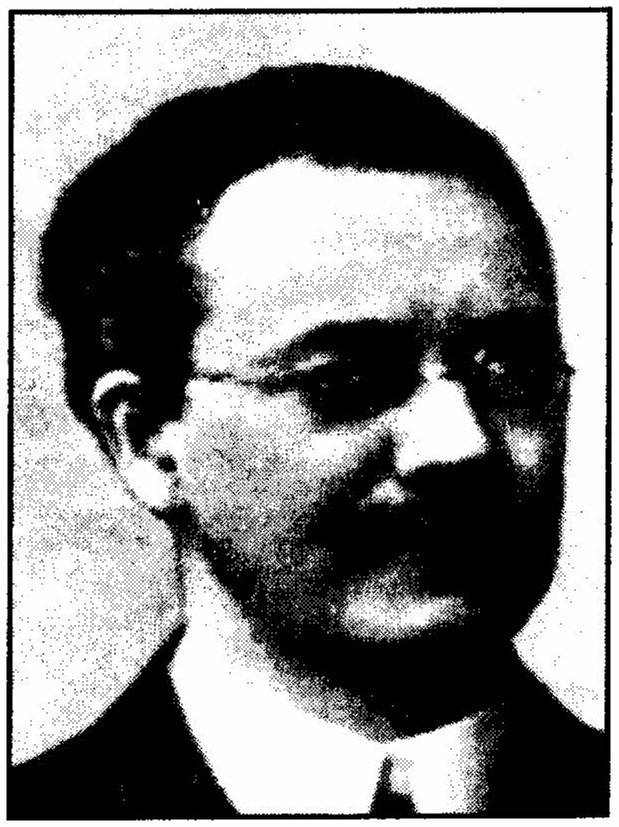
John RENNIE
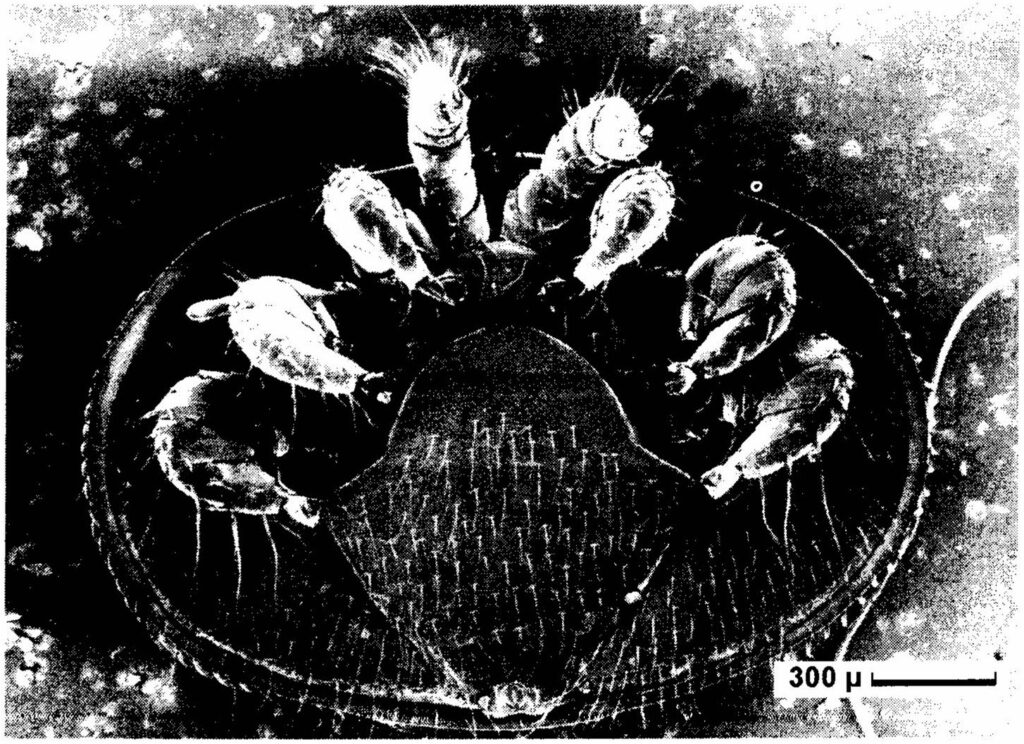
A. woodi occurs widely in Europe, in Russia and in parts of Africa as well as in Asia. Before 1980, the mite was never found in North America but in that year it was isolated from adult honey bees in Mexico and was first detected in the United States on July 3rd 1984.
A. C. Oudemans first described V. jacobsoni Oud. on A. cerana from Java in 1904, when he was working in Batavia (now Jakarta, Indonesia).
Anthonie Cornelis Oudemans (1858-1943) was born in Batavia in the Dutch East Indies and was sent to The Netherlands to continue his education when he was about 13 years old. He studied at the University in Utrecht and later became Director of the Botanical and Zoological Gardens in The Hague. His early interests were in Ornithology, which included important work on the Dodo and it was an interest in bird parasites which led him to the study of mites. During a career as a schoolmaster, he finally settled in Arnhem. At first, Acarology was a hobby for leisure hours but after retirement his work on mites became a full time study and he is regarded as a world authority on the group. In 1941 Oudemans published his last paper, number 584, and died on January 14th 1943.
Varroa jacobsoni has parasitized the Asian honey bee, A. cerana, „probably since evolutionary times” (Crane, 1999) but in a province of the Pacific region of the USSR, it crossed the species barrier to A. mellifera, which had been introduced, causing major destruction to its new host. The mite spread relentlessly, reaching Bulgaria (1973), the former Yugoslavia (1976), Germany (1977), Czech Republic (1978), Poland (1980), France (1982) and England, where the first recorded presence was on Saturday April 4th 1992, although the mite was almost certainly there before this date. A standstill order preventing the movement of bees was imposed. Varroa became „an economic concern” in Japan and China in the 1950’s and 1960’s, in Europe in the late 1960’s and 1970’s and in Israel and North America in the 1980’s (Sammataro et al., 2000).
Polish workers from the past include Professor S. Kirkor, a bee pathologist, who in 1950 found A. woodi for the first time in Poland. In addition, there have been several other workers from the Czech Republic, Poland, Russia and the Ukraine working on the mites associated with bees (see Chmielewski, 1998). Mercedes Delfinado-Baker and Edward W. Baker have worked together since the early 1960’s, on the systematics of honey bee mites from around the world, describing several new genera and species associated with Apis, including T. clareae from Asia which normally occurs on Apis dorsata F., but can live on other species of Apis including A. mellifera (see Table).
strona 112Table Mites parasitizing bees – Roztocze psożytujące na pszczołach
| Year | Mite | Bee | Remarks |
|---|---|---|---|
| 1904 | Varroa jacobsoni Oud. | Apis cerana F. | Java by Oudemans |
| 1921 | Acarapis woodi (Rennie) | Apis mellifera L. | UK by Rennie |
| 1961 | Tropilaelaps clareae Delfinado et Baker | Apis dorsata F. | Philippines and South-East Asia, by Delfinado and Baker |
| 1974 | Euvarroa sinhai Delfinado and Baker | Apis florea F. | India by Delfinado-Baker and Baker |
| 1982 | Tropilaelaps koenigerum Delfinado-Baker and Baker | Apis dorsata F. | Sri Lanka by Delfinado-Baker and Baker |
| 1987 | Varroa underwoodi Delfinado-Baker and Aggarwal | Apis cerana F. | Nepal by Delfinado-Baker and Aggarwal |
This table, based on Chmielewski (1998) and Crane (1999), refers to some of the important dates and several of the mites recorded from honey bees. The reader should consult the above authors for full listings, references and more detailed information.
ACKNOWLEDGEMENTS
The author wishes to thank Tom McGravie, Adrian Hick and Mischa Koppenberg for help with the photographs. In particular he would like to thank Wit Chmielewski for commenting on the paper, help with the language and for suggesting additional references.
REFERENCES
Adam Bro. (1968) – „Isle of Wight” or acarine disease : its historical and practical aspects. Bee World, 49 : 6-18.
Chmielewski W. (1998)- Roztocze (Acarina) występujące na pszczołach społecznych (Hymenoptera : Apidae : Apinae, Bombinae). Wiad. entomol., 16 (3-4) : 206-216.
Crane E. (1999)- The World History of Beekeeping and Honey Hunting. Duckworth, London.
Hirst S. (1921)- On the mite Acarapis woodi (Rennie) associated with Isle of Wight disease. Annals and Magazine of Natural History, Series 9, 7 : 509-519.
Kirkor S. (1950)- Zaraza roztoczowa przekroczyła granice. Pszczelarstwo, 1 : 31-33.
Oudemans A., C. (1904) – On a new genus and species of parasitic Acari. Notes Leyden Museum, 24 :216-222.
strona 113Prasad V. (1982)- History of Acarology. Indira Publishing House, Michigan, USA.
Rennie J. (1921)- Isle of Wight disease in hive bees – Acarine disease :the organism associated with the disease-Tarsonemus woodi, n. sp. Transactions of the Royal Society of Edinburgh, 52 : 768-779.
Sammataro D., Gerson U., Needham G. (2000)- Parasitic mites on honey bees : Life history, Implications, and Impact. Annual Review of Entomology. 45 : 519-548.
ROZTOCZE I PSZCZOŁY – SZKIC HISTORYCZNY
Baker R.A.
Streszczenie
W szkicu historycznym przybliżono sylwetki pierwszych naukowców zajmujących się roztoczami związanymi z pszczołami. Oudemans był pierwszym, który w 1904 roku opisał Varroa jacobsoni Oud., a Rennie, z zespołem swoich pracowników, w 1921 roku odkrył i podał opis Acarapis woodi (Rennie).
Podano informacje biograficzne o obydwu naukowcach. Odniesiono się do odkryć i danych dotyczących rozprzestrzeniana się Varroa w Europie.
W ostatnich latach, Delfinado i Baker opisali nowe roztocze z pszczół, uzupełniając i powiększając listę gatunków występujących na pszczołach rodzaju Apis.
Słowa kluczowe: Apidae, pszczoły miodne, historia, roztocze, pasożyty.
Errata — błędy druku znalezione podczas digitalizacji
- s. 110, podpis ryciny: „jacbosoni” → jacobsoni
- s. 112, tabela: „psożytujące” → pasożytujące
- s. 113, streszczenie: „rozprzestrzeniana” → rozprzestrzeniania