

SOME INHIBITORS OF POLYPHENOL OXIDASE IN HONEY
tekst: Stefan Martyniuk
Pszczelnicze Zeszyty Naukowe, Rok XXXVIII, 1994 — Stefan Martyniuk
strona 67PSZCZELNICZE ZESZYTY NAUKOWE Rok XXXVIII 1994
Stefan Martyniuk
Department of Microbiology, Institute of Soil Sc. and Plant Cultivation, 24-100 Puławy, Poland
Summary
Phenolics extracted from honey with ethyl ether were fractionated using a C18 column and C18 SEP-PAK cartidges. All fractions were tested for their inhibitory effect on polyphenol oxidase activity. Two most inhibitory honey fractions were found to contain t-cinnamic and p-,coumaric acid. Both acids were strong, noncompetitive inhibitors of catechin oxidation by mashroom polyphenol oxidase (PPO), with Ki = 0,014 mM for t-cinnamic acid and Ki = 0,026 mM for p-coumaric acid.
Keywords: honey, browning, inhibition, polyphenol oxidase, t-cinnamic acid, p-coumaric acid.
INTRODUCTION
Honey has recently been reported to inhibit browning of apple slices, grape juice and activity of polyphenol oxidase (PPO) in model systems (Oszmiański, Lee 1990). These authors showed that low molecular compounds present in honey were responsible for the inhibitory effect. PPO is a copper enzyme causing the enzymatic browning reactions in fruit and vegetable products, thus searching for substances or natural products able to hamper activity of this enzyme is being an important task in food processing.
Honey may contain substantial amounts of phenolic compounds, including free aromatic carboxylic acids (Steeg, Montag 1987, Tan et al 1988). It has been found (Steeg, Montag 1987) that concentrations of phenylacetic acid and phenyllactic acid in different honeys renged between 100 and 500 mg per kg of honey. Since some phenolic acids were shown to be inhibitory to PPO extracted from fruits ( Walker, Wilson 1975), the purpose of this work was to find out which fractions of phenolics occurring in honey were responsible, at least partially, for the inhibitory effect on PPO.
MATERIAL AND METHODS
Materials. Commercial honey (floral type, blended of clover and alfalfa) was obtained from a local producer at Geneva, USA. Tyrosinase [polyphenol oxidase (PPO)] from mashroom, standards of catechin, p-coumaric and cinnamic acids were obtained from Sigma Chemical Co.
strona 68Extraction of phenolics from honey. One hundred grams of honey was diluted with 200 ml of distilled water and extracted with 500 ml of ethyl ether by shaking for 2 min. in a separatory funnel. The extraction was repeated twice with 300 ml of ethyl ether. Ether was removed from the extract on a rotary evaporator and the residue was dissolved in 30 ml of 50% ethanol. Ethanol was removed in vacuo, the extract concentrated to about 10 ml and filtered through Whatman No. 4 filter paper to remove undissolved materials. The honey phenolics were than fractionated into neutral and acidic fractions using three C18 SEP-PAK cartidges as described by Jaworski, Lee (1987).
Fractionation of acidic phenolics. The acidic phenolics after elution from SEP-PAK cartidges with methanol and removing of this solvent in vacuo were dissolved in 0,5 ml of 8% acetonitrile in 5% acetic acid and charged into 10 x 1 cm C18 (protein and peptide, VYDAC) column. The column was eluted with 8% acetonitrile in 5% acetic acid under pressure using a Buchler peristaltic pump at the flow rate 0,5 ml/min. The optical density of phenolic fractions (2 ml) collected by a fraction collector was monitored at 280 nm. Under these conditions the acidic phenolics were separated into 2 main fractions (fig. 1).
Fraction I was further fractionated on the same column using 5% acetic acid as the mobile phase (fig. 2). After removing of the mobile phase in vacuo, each fraction was dissolved in 5 ml of distilled water and tested for inhibitory effect on PPO.
PPO inhibition test. To 1,5 ml of 2 mM solution of catechin in 0,1 M phosphate-citrate buffer at pH 5,5; 0,5 ml of the tested fraction or 0,5 ml of distilled water (control) and 30 ul of PPO (0,5 mg/ml) were added. The rate of browning was measured at 420 um using Hewlett-Packard 8452A spectrophotometer equiped with a diode array detector and a series 300 computer.
The kinetics of PPO inhibition by t-cinnamic acid and p-coumaric acid was run under the same conditions with different concentrations of these acids and catechin as the substrate.
TLC analysis. Identification of the isolated inhibitors was curried out on Baker-fex cellulose F plates with 8% acetonitrile in 5% acetic acid as a developing solvent and on Eastman 6060 silica gel (F-254) plates with butanol:acetic acid:water (4:1:2) as a developing system. The spots were visualized by sprying with Folin-Ciocalteu reagent or under UV lamp. The identity of the isolated compounds was also confirmed by comparison of their UV spectra with those of the standards.
Quantitative determinations. The total phenolics and p-coumaric acid contents in honey fractions were determined using Folin-Ciocalteu method (Amerine and Ough 1974). For the estimation of cinnamic acid content a calibration curve was prepared by plotting different concentrations of standard t-cinnamic acid in ethanol versus absorbance at 272 nm measured on Hewlett-Packard 8452A spectrophotometer. The content of t-cinnamic acid in honey fraction was read from the calibration curve.
strona 69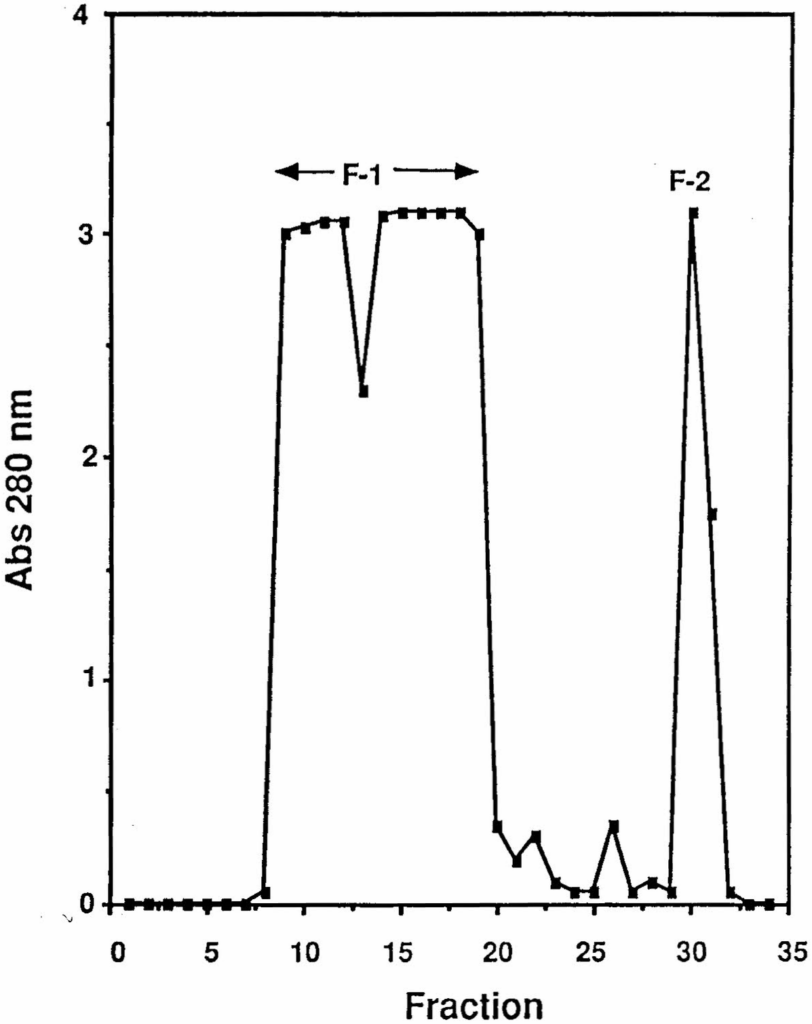
Fig. 1. Fractions of honey acidic phenolics eluted from C18 column by 8% acetonitrile in 5% acetic acid. Frakcje kwaśnych fenoli z miodu eluowane z kolumny C18 za pomocą 8% acetonitrylu w 5% kwasie octowym.
strona 70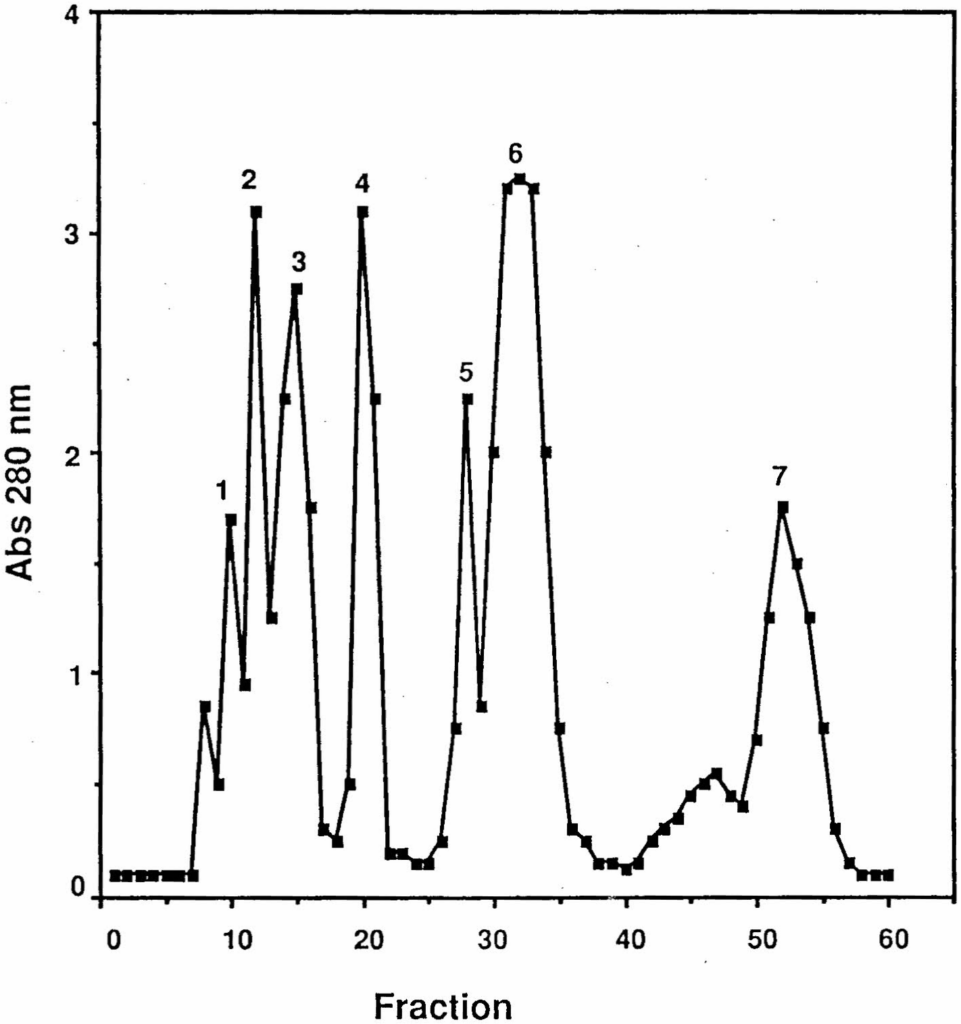
Fig. 2. Separation of fraction F-1 (fig. 1) on C18 column using 5% acetic acid as the mobile phase. Rozdział frakcji F-1 (ryc. 1) na kolumnie C18 za pomocą 5% kwasu octowego jako faza ruchoma.
RESULTS AND DISCUSSION
Though the content of the acidic phenolics in honey, as determined by Folin-Ciocalteu reagent, was lower than that of the neutral phenolics (tab. 1) they were substantially more inhibitory to PPO (99% of PPO inhibition) as compared to the neutral phenolics (40% inhibition). Therefore, the acidic phenolics were further fractionated on a C18 column. When the column was eluted with 8% acetonitrile in 5% acetic acid the acidic phenolics were separated into two main fractions (fig. 1), both being highly inhibitory to PPO.
strona 71Table 1 Contents of neutral phenolics and aromatic carboxylic acids in honey (mg/kg)* Zawartość obojętnych związków fenolowych i karboksylowych kwasów aromatycznych w miodzie (mg/kg)*
| Neutral phenolics / Fenole obojętne | Acidic phenolics / Fenole kwaśne | p-coumaric a. / Kwas p-kumarowy | t-cinnamic a. / Kwas t-cynamon. |
|---|---|---|---|
| 28,5 | 15,0 | 4,48 | 0,34 |
- average of 3 determinations – średnie z 3 oznaczeń
Fraction F-1 consisting of unresolved mixture of different phenolic acids was charged again to the C18 column and eluted with 5% acetic acid to yield 7 main fractions (fig. 2). Fraction 6 appeared to be the most inhibitory to PPO activity. In order to get more material, several portions of honey were extracted with ethyl ether and after separation of the acidic phenolics on the C18 column, the most inhibitory fractions: F-2 and 6 were collected. Further purification of these fractions was performed by passing small portions of the fractions through the C18 column with 8% acetonitrile in 5% acetic acid as the mobile phase. Purified fractions were collected and analyzed by TLC.
Fraction F-2 applied on cellulose F plates showed (under UV) after development one spot having Rf = 0,32 – the same as the standard t-cinnamic acid. On silica gel plates it had Rf = 0,73 – also similar to that of the standard.
Fraction 6 analyzed by TLC under the same conditions gave on cellulose Rf = 0,41 and on silica gel Rf = 0,68 which were identical with those of the standard p-coumaric acid (p-hydroxycinnamic acid).
The UV spectra of alcoholic solutions of compounds F-2 and 6 isolated from honey were very similar to the UV spectra of the standard t-cinnamic and p-coumaric acid, respectively. Therefore, fraction F-2 was found to contain t-cinnamic acid while fraction 6 p-coumaric acid. The contents of these acids in the tested honey shown in table 1 correspond to those reported for German honeys: < 1 mg/kg for t-cinnamic acid and < 10 mg/kg for p-coumaric acid (Steeg, Montag 1987).
Both t-cinnamic and p-coumaric acids isolated from honey were strong inhibitors of catechin oxidation by mashroom PPO. Kinetic data obtained by using different concentrations of catechin and different concentrations of these acids were subjected to analysis by double-reciprocal plots. Both acids were found to be noncompetitive inhibitors of PPO activity with Ki = 0,014 mM for t-cinnamic acid and Ki = 0,026 mM for p-coumaric acid. Thus, under conditions of these studies t-cinnamic acid was a stronger inhibitor of mashroom PPO activity than p-coumaric acid. Other authors (Gunata et al 1987, Walker, Wilson 1975) reported that among several aromatic carboxylic acids they tested, p-coumaric acid and cinnamic acid were also the
strona 72strongest inhibitors of PPO extracted from different fruits. In those studies p-coumaric acid was, however, more inhibitory than cinnamic acid. Moreover, Ki values of these acids (Ki = 0,11 – 0,32 mM for p-coumaric acid and Ki = 0,28 – 0,55 mM for cinnamic acid) reported by the above mentioned authors were higher than those reported here. The main cause of these discrepancies might be the source of the enzyme used. Tests performed in the presented studies with the use of pure mashroom tyrosinase probably allowed for obtaining more precise results.
The results of this work indicate that aromatic compounds occurring in honey, especially t-cinnamic acid and p-coumaric acid, may significantly contribute to the inhibitory effect of honey on PPO and on browning reactions of fruits. However, honey extracted with ethyl ether still retains much of the inhibitory effect on PPO activity (data not shown), indicating that honey contains also other substances inhibitory to this enzyme.
CONCLUSIONS
- Two most inhibitory to polyphenol oxidase (PPO) honey fractions were found to contain t-cinnamic acid and p-coumaric acid.
- Both acids are strong, noncompetitive inhibitors of PPO, with Ki = 0,014 mM for t-cinnamic acid and Ki = 0,026 mM for p-coumaric acid.
ACKNOWLEDGMENT
Thanks are due to Prof. C.Y. Lee, Department of Food Sc. and Technology, NYSAES Geneva, USA, for the financial support and helpful discussion.
LITERATURE
Amerine M. A., Ough C. S. (1974) – Wine and must analysis. John Willey and Sons, New York.
Gunata Y. Z., Sapis J-C., Moutounet M. (1987) – Substrates and aromatic carboxylic acid inhibitors of grape phenol oxidases. Phytochemistry, 26: 1573-1575.
Jaworski A. W., Lee C. Y. (1987) – Fractionation and HPLC determination of grape phenolics. J.Agricult.Food Chem., 35:257-259.
Oszmiański J., Lee C. Y. (1990) – Inhibition of polyphenol oxidase activity and browning by honey. J.Agricult.Food Chem., 38:1892-1895.
Steeg E., Montag A. (1987) – Nachweis aromatischer Carbonsauren in Honig. Z.Lebensm.Unters.Forsch., 184:17-19.
Tan S-T., Holland P. T., Wilkins A. L., Molan P. C. (1988) – Extractives from New Zealand honeys. J.Agricult.Food Chem., 36:453-460.
Walker J. R. L., Wilson E. L. (1975) – Studies on the enzymatic browning of apples. Inhibition of apple O-diphenol oxidase by phenolic acids. J.Sci.Food Agricult., 26:1825-1831.
strona 73NIEKTÓRE INHIBITORY OKSYDAZY POLIFENOLOWEJ W MIODZIE
S. Martyniuk
Streszczenie
Wcześniejsze badania innych autorów wykazały, że w miodzie znajdują się niskocząsteczkowe związki hamujące aktywność oksydazy polifenolowej – enzymu odpowiedzialnego za brunatnienie przetworów owocowych i warzywnych. Celem tej pracy było stwierdzenie, które z frakcji związków fenolowych obecnych w miodzie są odpowiedzialne, przynajmniej częściowo, za hamujący wpływ miodu na aktywność oksydazy polifenolowej.
Związki fenolowe ekstrahowano z miodu za pomocą eteru etylowego, a następnie ekstrakty rozdzielano na frakcje przy użyciu mikrokolumn C18 (SEP-PAK) i kolumny 10 x 1 cm wypełnionej C18 (VYDAC). Wszystkie uzyskane frakcje testowano pod względem ich wpływu na utlenianie katechiny przez oksydazę polifenolową (Sigma).
Stwierdzono, że dwie frakcje: F-2 i 6 (ryc. 1 i 2) najsilniej hamujące aktywność badanego enzymu zawierały, odpowiednio kwas t-cynamonowy oraz kwas p-kumarowy. Oba kwasy są silnymi, niekompetycyjnymi inhibitorami aktywności oksydazy polifenolowej, a Ki dla kwasu t-cynamonowego wynosiła 0,014 mM i 0,026 mM dla kwasu p-kumarowego.
Słowa kluczowe: miód, brunatnienie, hamowanie, oksydaza polifenolowa, kwas t-cynamonowy, kwas p-kumarowy.
Errata — błędy druku znalezione podczas digitalizacji
- s. 67, streszczenie: „p-,coumaric” → p-coumaric
- s. 67, streszczenie: „cartidges” → cartridges
- s. 67, 2×: „mashroom” → mushroom
- s. 67: „renged” → ranged
- s. 68, 2×: „cartidges” → cartridges
- s. 68: „were than fractionated” → were then fractionated
- s. 68: „420 um” → 420 nm
- s. 68: „equiped” → equipped
- s. 68: „curried out” → carried out
- s. 68: „Baker-fex” → Baker-flex
- s. 68: „sprying” → spraying
- s. 71, 2×: „mashroom” → mushroom
- s. 72: „mashroom” → mushroom
- s. 72, piśmiennictwo: „Willey” → Wiley
- s. 72, piśmiennictwo: „Carbonsauren” → Carbonsäuren