

IMIDAZOLE DERIVATIVES IN CONTROL OF THE HONEY BEE BROOD MYCOSES
tekst: Zdzisław Gliński, Marek Chmielewski
Pszczelnicze Zeszyty Naukowe, Rok XL, 1996 — Zdzisław Gliński, Marek Chmielewski
strona 165PSZCZELNICZE ZESZYTY NAUKOWE Rok XL, Nr 2 1996
Zdzisław Gliński, Marek Chmielewski
Department and Clinic of Infectious Diseases of Animals, Faculty of Veterinary Medicine, Akademicka 12, 20-033 Lublin, POLAND
Summary
The prevalence of chalkbrood and mixed fungal infections (chalkbrood and Aspergillus sp.) in the honey bee is receiving increasing recognition and is demanding that better drugs to be found for their control. Antifungal drugs that suppress insect immune reactions, both innate and induced, increase the severity and facilitate fatal course of mycoses. Many drugs „in vitro” effective against Ascosphaera apis and Aspergillus sp. due to their immunosupressive action should be excluded from common use in the honey bee.
Klotrimazole (imidazole derivative;phenyl-(2-chloro-phenyl)-l-imidazolyl-methane) at a dose of 0.1 or 0.5 g/bee colony sprayed over brood and bees 3 times at 5 day intervals effectively controlled chalkbrood, and, at a dose of 0.5 g/colony suppressed Ascosphaera apis and Aspergillus sp. mixed infection. Klotrimazole at therapeutic doses appeared to be an immunostimulator of hemocytic defense reactions of the honey bee. It increased phagocytic index and blood lysozyme activity. Moreover, induced cell-free defense reactions (synthesis of apidaecins in the fat body) of worker bees have not been disturbed by Klotrimazole.
Keywords: honey bee, Klotrimazole, Nystatin, chalkbrood, immunological profile.
INTRODUCTION
Ascosphaera apis alone or together with Aspergillus sp., most often resides within bee colonies without causing the overt signs of disease until the proper conditions exist (G i l l i a m et al. 1978). The most important predisposing factor for chalkbrood and mixed fungal infections is suppression of insect protective mechanisms (G l i ń s k i and J a r o s z 1992). Antifungal drugs of an immunosuppressive effect upon bees may therefore stimulate development of A. apis and Aspergillus sp. in insect organism whereas enhancement of certain immune responses by immunostimulators or antifungal drugs of immunostimulatory action can increase resistance against a variety of fungal species. Results of antifungal therapy in insects of increased immunity should be better than in normal, non-stimulated individuals.
The honey bee has evolved very effective defensive reactions for the purpose of protection against microorganisms (G l i ń s k i and J a r o s z
strona 1661995 a,b).Various mechanisms operate in defense against fungal infections. The most important are protective barriers of the body covering, tracheal system and intestines, and hemocytic and cell-free immune reactions of the body cavity (D u s t m a n 1993). In internal defense, the main role is played by cellular and humoral encapsulation (G o t z 1986), whereas nodule formation and phagocytosis are less effective (B a n g 1975). Although they do not kill fungal spores or inhibit their germination lysozyme and inducible antibacterial hemolymph proteins (apidaecins and abaecin) most probably arrest multiplication of fungi and molds in insect hemocoel. Hence dysfunction of immune reactions may predispose to diseases caused by potentially pathogenic microorganisms, including molds and fungi.
At present Nystatin and Amphotericin B are the polyenes which are mostly used clinically, to control chalkbrood. These polyene antibiotics, however, exert many side effects, main ly a high degree of toxicity for brood and bees and their not satisfactory effectiveness under field conditions (G l i ń s k i, O s i p o w s k i 1978, T a b e r 1992). Moreover, Amphotericin and probably also Nystatin, may produce some degree of immunosupression in treated insects.
This paper is restricted to a review of the therapeutic effect of Klotrimazole (imidazole derivative) used in chalkbrood infected bee colonies and in colonies with Ascosphaera apis and Aspergillus sp. mixed infection. Studies on immunomodulatory effects of Klotrimazole on worker bees under laboratory conditions are also included. The treatment of chalk brood and mixed infections should be improved by Klotrimazole – effective antifungal drug of immunostimulatory effects in the honey bee.
MATERIALS AND METHODS
Klotrimazole (phenyl-(2-chloro-phenyl)-l-imidazolyl-methane, Biowet Puławy) 2.0% alcohol suspension was used during treatment. A dose of 0.1 or 0.5 g of Klotrimazol in 50% sugar syrup per /bee colony was sprayed over brood and bees on combs 3 times at 5 day intervals.
Nystatin (Polfa), alcohol solution prepared just before use served as a control of Klotrimazole treatment. The inside of the hive was sprayed with 30 μg of Nystatin in 250 ml of 50% sugar syrup 4 times at 5 day intervals. Super frames were removed from the hive before treatment.
Chalkbrood infected bee colonies. Clinical observations started in May on 120 colonies of Apis mellifera naturally infected with chalkbrood (over 50 chalky white mummies per colony), and on 56 colonies with mixed A. apis and Aspergillus flavus infection. Klotrimazole was used in 100 chalkbrood and 50 bee colonies with mixed fungal infection, Nystatin was applied in 20 chalkbrood and 6 mixed infected bee colonies.
Mycological inspection was performed before and after treatment,
strona 167and in spring of the year after treatment.
Immunological profile components were determined on caged bees (200 worker bees, 32°C, 50% RH) exposed to Klotrimazole at the dose equal to 0.1 and 0.5 g of the active substance per colony. Phagocytic index (G l i ń s k i and J a r o s z 1992) and level of blood lysozyme (M o h r i g and M e s s n e r 1968) were determined after 0, 1, 2 and 3 weeks since the beginning of the first treatment in non-induced bees. The activity of lysozyme was calculated from the standard curve for crystalline egg white lysozyme (EC 3.2.1.17).
The activity of apidaecins was done according to C a s t e e l s et al. (1989) after 36 h in Escherichia coli D32 stimulated bees always after 0, 1,2 and 3 weeks since the beginning to Klotrimazole exposition. The concentration of apidaecins was calculated from the standard curve prepared for gentamycin sulfate.
RESULTS
Out of three examined parameters of bee immunological profile, Klotrimazole has not changed, but even increased, the value of phagocytic index in bees stimulated with E. coli cells (Fig. 1), increased activity of blood lysozyme after 2 and 3 weeks since insect exposition to the drug (Fig. 2), and did not disturb the synthesis of apidaecins. The level of these inducible bee immune polypeptide increases with the time of insect exposition to Klotrimazole (Fig. 3). Apidaecins peaked after 2 weeks contact of bees with this drug.
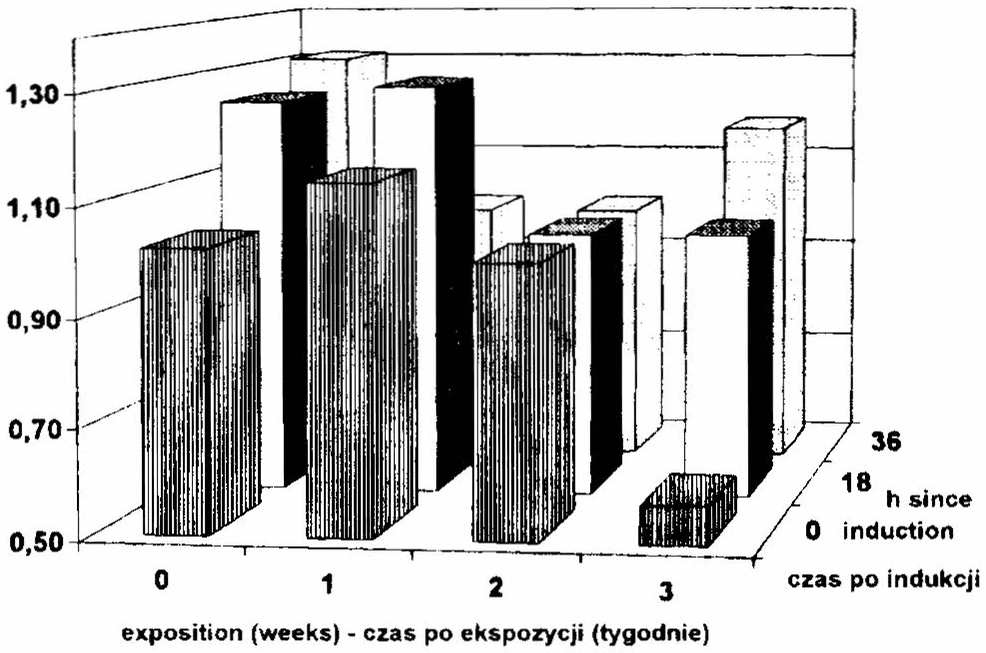
Fig. 1. Phagocytic index in worker bees immunized with Escherichia coli and treated with Klotrimazole (0.5 g/colony). Indeks fagocytarny pszczół robotnic immunizowanych Escherichia coli i eksponowanych na Klotrimazol (0,5 g/rodzinę).
strona 168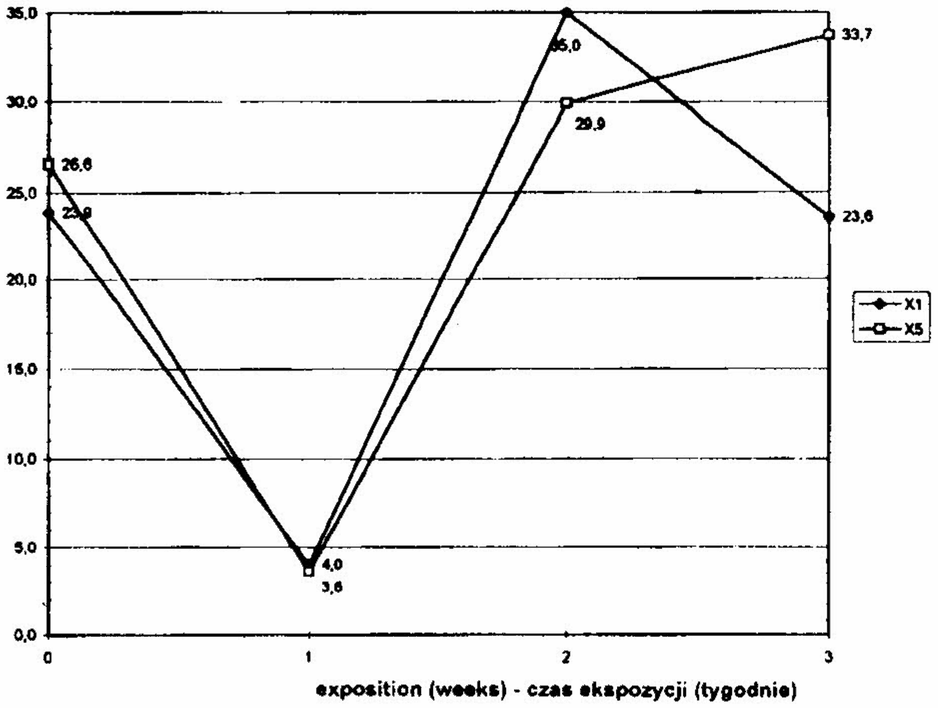
Fig. 2. Activity of blood lysozyme (μg/ml) in treated with Klotrimazol at a dose of 0.1 g/colony (1x) and 0.5 g/colony (5x). Aktywność lizozymu (μg/ml) krwi pszczoły eksponowanej na Klotrimazol w dawce 0,1 g/rodz. (1x) i 0,5 g/rodz. (5x).
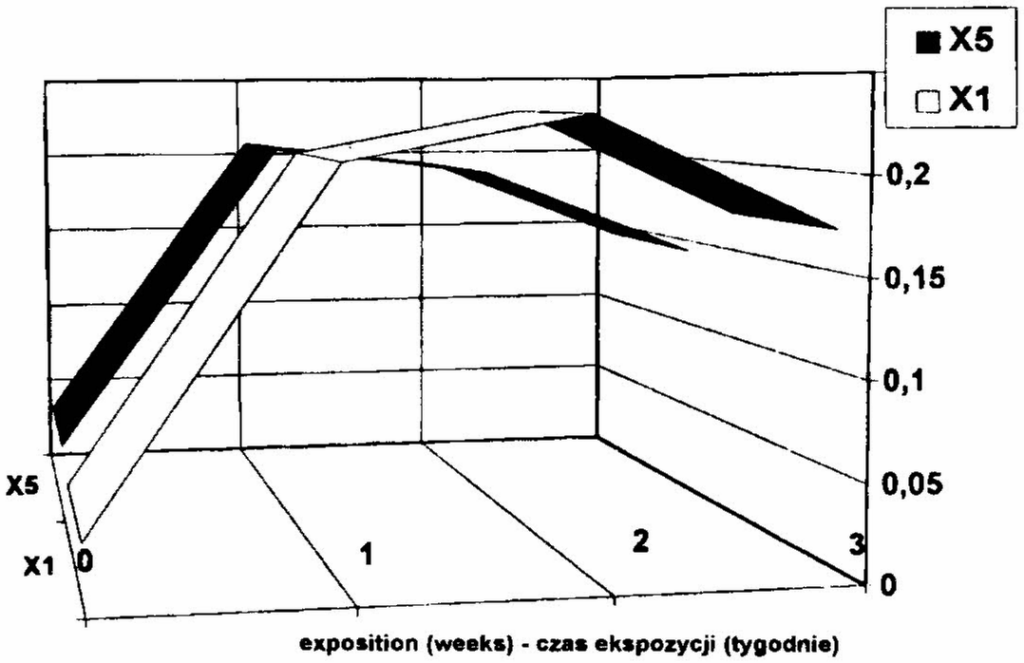
Fig. 3. Concentration of apidaecins in hemolymph of worker bees treated with Klotrimazole at a dose of 0.1 g/colony (1x) and 0.5 g/colony (5x). Poziom apidycyn w hemolimfie robotnic eksponowanych na Klotrimazol w dawce 0,1 g/rodz. i 0,5 g/rodz.
In field tests, Klotrimazole treatment offered the best control of chalkbrood during the study (Fig. 4). In treated colonies, any sanitary manipulations such as disinfection or removal of combs with mummies have not been done. Within one week since the first treatment, the bees removed
strona 169more than 60% of diseased brood and chalky mummies, and by the end of 6 weeks 89% of colonies treated with klotrimazole at a dose of 0.1 g/colony and 91% of colonies treated with this drug at a concentration of 0.5 g/colony were free of chalkbrood. Brood quality in cured colonies was good .
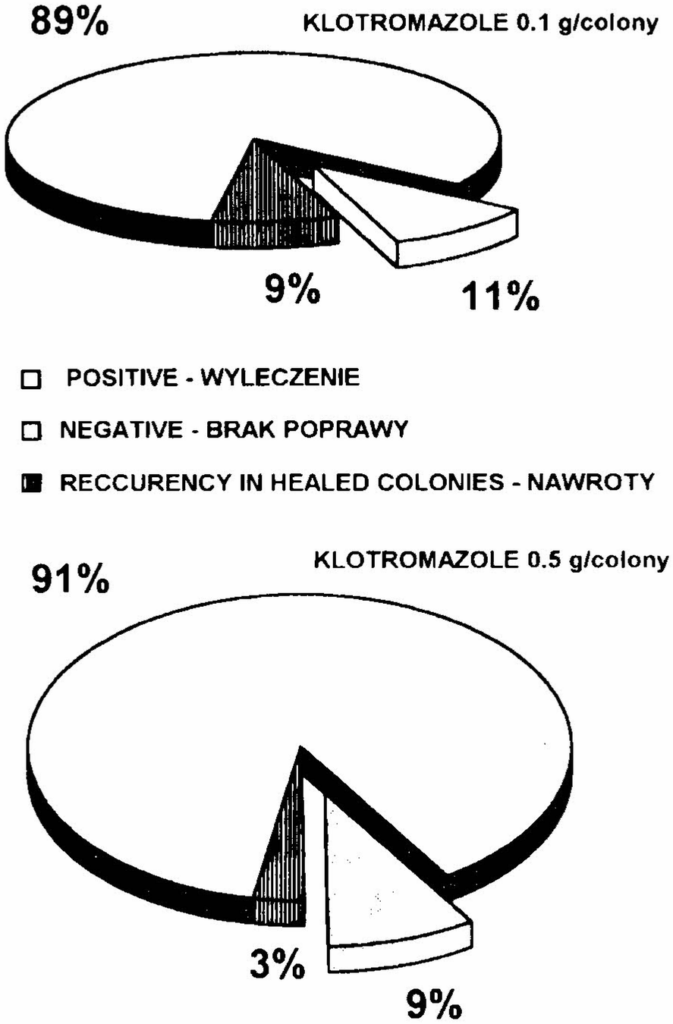
Fig. 4. The efficacy of chalkbrood treatment with Klotrimazole. Skuteczność leczenia grzybicy otorbielakowej Klotrimazolem.
Nystatin controlled chalkbrood in 60% of colonies, and recurrence of chalkbrood was found in 50% of the cured bee colonies in a one year interval (May to May). Colonies in which recurrence appeared varied greatly in their severity of chalkbrood disease The number of mummies by the end of May ranged from 45 to 16 .
Klotrimazole, at a dose of 0.5 g/bee colony, reduced mixed A. apis and Aspergillus flavus infection (Fig. 5). However, percentage of negative results and recurrence in cured colonies was higher in mixed infections than
strona 170in A. apis infected bee colonies.
Nystatin showed very low efficiency in therapy of mixed fungal infections because only 2 out of 6 colonies symptoms of chalkbrood disappeared after Nystatin treatment. In these, chalkbrood mummies appeared in Spring.
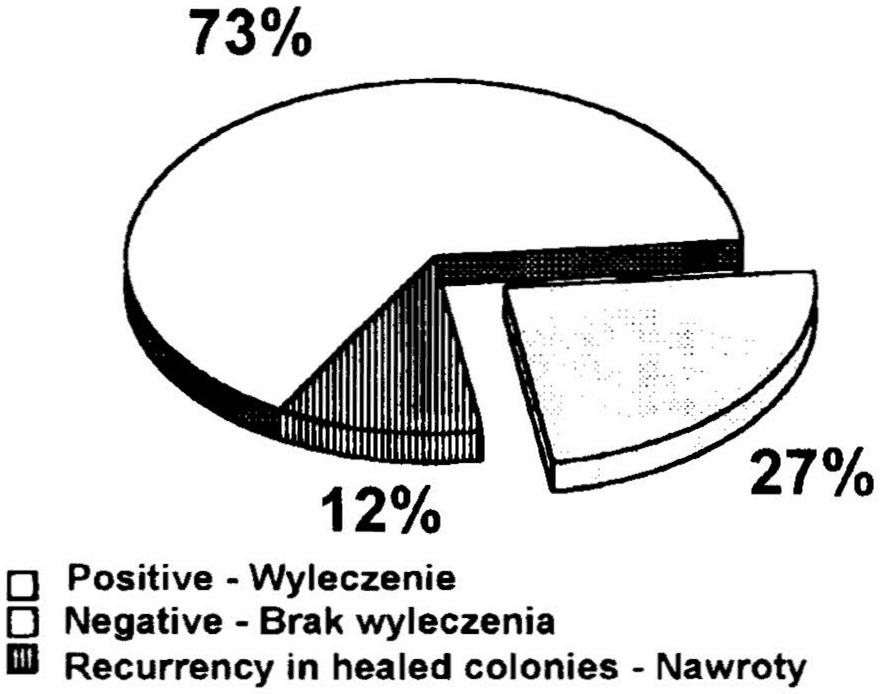
Fig. 5. The efficiency of the treatment of mixed fungal infection with Klotrimazole. Skuteczność leczenia mieszanych zakażeń grzybiczych Klotrimazolem.
DISCUSSION
In recent years, extensive epidemiological study has shown that mycotic diseases are global in distribution and that they are responsible in bees for chalkbrood, stone brood and mixed infections (T a b e r 1992). Although most A. apis and Aspergillus sp. strains are sensitive „in vitro” to a wide range of antibiotics and chemicals, only a limited number of such compounds can be tolerated by the bee host at a concentration that effectively suppresses the invading organisms. Another, valid problem, is destruction of protective barriers of insect body and/or suppression of immune antifungal mechanisms by many antibiotics and chemicals of antifungal action. This action is well docummented in human and veterinary medicine (J a k ó b i s i a k 1995).
Although Amphotericin B and Nystatin posses a wide spectrum of activity against both saprophytic and pathogenic fungi, their therapeutic efficacy in chalkbrood is low. Toxicity of these antibiotics is such that their use in treatment of chalkbrood should be limited (G l i ń s k i and R z e d z i c k i 1980). Effectiveness of Nystatin increases when all supers are cleaned and all frames sprayed, washed off the inside of the hive.
strona 171Klotrimazole, like other imidazole derivatives (Miconazole, Enilconazole) affects the permeability of the cell membranes in yeast and mold cells. At higher concentrations, it alters the membranes to the extent that leakage comes about. In normal yeast and mold cells, the permeability is determined, among other things, by ergosterol. Therefore, the primary antifungal activity of Klotrimazole is based precisely on the synthesis of ergosterol. That inhibitory process is selective, and inhibition of cholesterol synthesis is slight and hence toxicity of Klotrimazole for mammals and insects is low.
Recent studies on Klotrimazole open a very interesting line of investigations on its use in the control of chalkbrood as effective and safe. Our earlier examinations revealed that low concentrations of Klotrimazole (1.0 – 1.5 μg/ml for Aspergillus flavus and 0.1 to 8.0 μg/ml) completely inhibited „in vitro” growth of fungi pathogenic for bees (Unpublished data).
Field experiments confirmed observations about antifungal effect of Klotrimazole in the chalkbrood. It is clear that Klotrimazole may control chalkbrood in colonies from which combs with affected brood are not removed before treatment. Moreover, Klotrimazole produced no adverse effects in worker bees and brood. Recurrence of chalkbrood observed the next year in part of treated colonies may result from reinfection of the colony either in autumn or in early spring. However, the survival of A. apis spores or mycelium can not be rejected. Combs or pollen contaminated with A. apis may serve as a source of infection. Spray of the medicated syrup facilitates the close contact of Klotrimazole with fungal spores germinating on larval cuticle, and prevents fungal infection via body coverings.
Immunomodulatory activity of Klotrimazole is multiway and complex (G r z e g o r c z y k 1996). Both hemocytic defense reactions, such as phagocytosis, and humoral immune mechanisms, innate (lysozyme) and inducible (apidaecins) are stimulated. Better effects of Klotrimazole, comparied to Nystatin, that possess the same MIC value for A. apis and Aspergillus flavus, may indicate to the role of immunostimulation in control of chalkbrood. Dysfunction of the immune responses, mainly cellular defense reactions, is commonly assumed as a prerequisite to mycotic disease in man and animals.
Therapy of mixed infections of A. apis and Aspergillus sp. is not satisfactory. Most probably, fungal spores and mycelium of Aspergillus are not completely eliminated during treatment. The fact that in aspergillosis both brood and worker bees may serve as a source of infection from which new insects are infected and reinfected, may in part explain why a relatively low percentage of colonies with A. apis and Aspergillus sp. mixed infections is cured after Klotrimazole.
strona 172CONCLUSIONS
- The imidazole derivative, Klotrimazol, opens a very interesting opportunity for searching for effective and safe chemical uses in the control of chalkbrood and mixed fungal infections (Ascosphaera apis and Aspergillus sp.).
- Klotrimazole stimulates defense reactions of the honey bee. The value of phagocytosis, and level of innate and inducible hemolymph immune proteins increase in worker bees exposed to Klotrimazole.
REFERENCES
B a n g F. B. (1975) – Phagocytosis in invertebrates. In: Invertebrate Immunity. Ed. K. Maramorosh, R. E. Shope, Academic Press, NY, San Francisco, London, 137-151.
C a s t e e l s P. R., A m p e C., J a c o b s F., V a e c k M., T e m p s t P. (1989) – Apidaecins: antibacterial peptides from honeybees. EMBO J., 8:2387-2392.
D u s t m a n n J. H. (1993) – Natural defense mechanisms of a honey bee colony against diseases and parasites. Am.Bee J., 133:431-437.
G i l l i a m M., T a b e r III S., R o s e J. B. (1978) – Chalkbrood disease of the honey bee, Apis mellifera L.: A progress report. Apidologie, 9:75-94.
G l i ń s k i Z., R z e d z i c k i J. (1980) – Chalk brood disease of the honey bee (Apis mellifica L.). Toxicity of the polyene antibiotics and Amphotericin B to larval and adult honey bees. Pol.Arch.Wet., 22:297-303.
G l i ń s k i Z., J a r o s z J. (1992) – Zarys Immunologii owadów. Wyd. AR Lublin.
G l i ń s k i Z., J a r o s z J. (1995a) – Mechanical and biochemical defences of honey bees. Bee World, 76:110-118.
G l i ń s k i Z., J a r o s z J. (1995b) – Cellular and humoral defences in honey bees. Bee World, 76:195-205.
G l i ń s k i Z., O s i p o w s k i T. (1978) – The influence of Nystatin and sanitary and breeding operations on the control of chalkbrood disease of the honeybee. Annals. UMCS, s. DD., 42:217-233.
G o t z P. (1986) – Encapsulation in arthropods. In: Immunity in Invertebrates. Ed by M. Brehelin, Springer, Berlin, Heidelberg, New York, Tokyo, 153-170.
G r z e g o r c z y k K. (1996) – Badania nad działaniem immunomodulującym chemioterapeutyków zalecanych w zwalczaniu warrozy (Apiwarol AS, Fluwarol) i w terapii grzybicy otorbielakowej (Klotrimazol) na modelu Apis mellifera i Galleria mellonella. Dys. dokt. Wydział Farmacji AM Lublin.
J a k ó b i s i a k M. (1995) – Immunologia. Wyd. Naukowe PWN, Warszawa.
M o h r i g W., M e s s n e r B. (1968) – Immunreaktionen bei Insekten. I. Lysozym als grundlegender antibakterielle Faktor im humoralen Abwehrmechanismus der Insekten. Biol. Zentralbl., 87:705.
T a b e r S. (1992) – Studies on chalkbrood disease. Am.Bee J., 132:327-328.
strona 173POCHODNE IMIDAZOLOWE W LECZENIU GRZYBIC CZERWIA PSZCZOŁY MIODNEJ
Z. Gliński, M. Chmielewski
Streszczenie
Grzybica otorbielakowa należy do powszechnie występujących chorób czerwia pszczoły miodnej przynoszących duże straty ekonomiczne w gospodarce pasiecznej. Leczenie grzybicy otorbielakowej utrudnia brak skutecznych leków oraz fakt, że grzybice rozwijają się w rodzinach o obniżonej odporności. Dlatego też z terapii grzybic należy eliminować preparaty o działaniu immunosupresyjnym, ponieważ mogą one pogłębiać już istniejącą supresję odporności. Dodatkowym problemem jest występowanie mieszanych zakażeń np. Ascosphaera apis i Aspergillus sp.
W leczeniu zastosowano Klotrimazol (Biowet, Puławy) – 2% roztwór w dawce 0,1 i 0,5 g substancji czynnej/rodzina w formie 3-krotnego oprysku czerwia i pszczół obsiadujących plastry w odstępach 5-dniowych. Kontrolę stanowiły rodziny leczone Nystatyną w dawce 0,5 g/rodzina stosowaną 4-krotnie w odstępach 5-dniowych. Klotrimazolem leczono 100 rodzin chorych na grzybicę otorbielakową i 20 rodzin z infekcja mieszaną, Nystatyną leczono 20 rodzin z grzybicą otorbielakową i 6 rodzin z mieszaną infekcją grzybiczą. Wartość indeksu fagocytarnego określono wg G l i ń s k i e g o i J a r o s z a (1992), poziom lizozymu hemolimfy wg M o h r i g a i M e s s n e r a (1968), apidycyn wg C a s t e e l s i wsp. (1989). Klotrimazol w dawce 0,1 g/rodzina i 0,5 g/rodzina stymulował komórkowe i humoralne odczyny obronne na co wskazuje wzrost wartości indeksu fagocytarnego, aktywność lityczna hemolimfy typu lizozymu oraz poziom apidycyn. Klotrimazol w dawce 0,1 g/rodzina skutecznie likwidował grzybicę otorbielakową w 89% rodzin, zaś w dawce 0,5 g/rodzina w 91% rodzin. Odsetek nawrotów w leczonych rodzinach na wiosnę wynosił odpowiednio 11% i 9%. Efektywność Klotrimazolu w leczeniu mieszanych zakażeń grzybiczych (Ascosphaera apis i Aspergillus sp.) była znacznie niższa; wyleczenia notowano u 73% rodzin. Terapia przy użyciu Nystatyny dała zadawalające efekty w 60% rodzin zakażonych grzybicą otorbielakową.
Słowa kluczowe: pszczoła miodna, Klotrimazol, Nystatyna, grzybica otorbielakowa, profil immunologiczny.
Errata — błędy druku znalezione podczas digitalizacji
- s. 165, streszczenie: „immunosupressive” → immunosuppressive
- s. 166: „D u s t m a n 1993″ → Dustmann 1993
- s. 166: „main ly” → mainly
- s. 166: „immunosupression” → immunosuppression
- s. 169, ryc. 4, 2×: „KLOTROMAZOLE” → KLOTRIMAZOLE
- s. 169, ryc. 4: „RECCURENCY” → RECURRENCY
- s. 170: „docummented” → documented
- s. 170: „posses a wide” → possess a wide
- s. 171: „comparied” → compared
- s. 173, streszczenie: „z infekcja mieszaną” → z infekcją mieszaną